
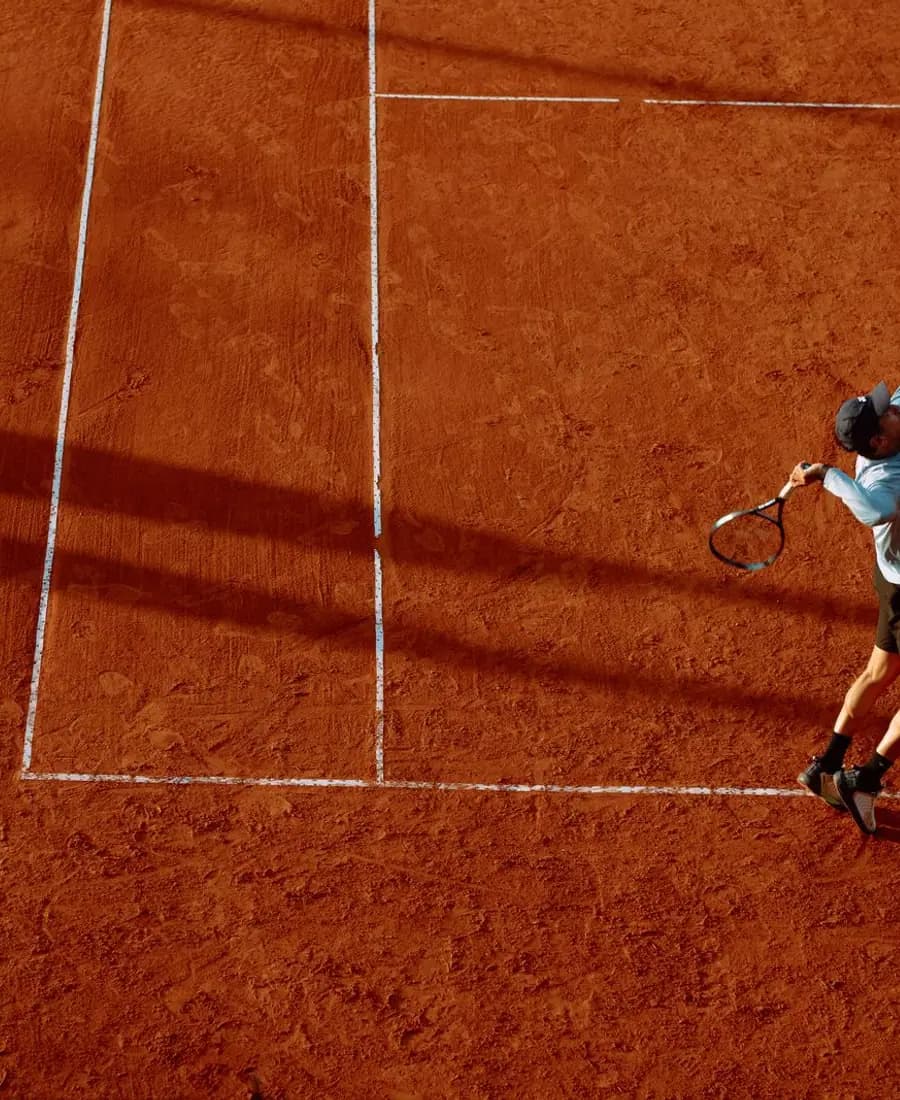
By every efficiency metric, the one-handed backhand should be extinct. It takes years longer to master, struggles against high balls to the shoulder, and offers less stability on the return of a big serve. Junior academies quietly steer kids toward the two-hander for exactly these reasons. And yet, at the top of the game, the one-hander persists, wielded by a small, stubborn, disproportionately beautiful minority. Understanding why it survives tells you something real about how tennis actually works.
What the one-hander gives up
Let's be honest about the costs first, because they are real.
- The high ball problem. A heavy topspin shot that kicks up above shoulder height is the one-hander's nightmare. The two-hander can meet it with the second hand for support; the one-hander must either back up, take it early, or slice.
- Return stability. Against a 130 mph serve, two hands brace the racquet against the impact. One hand can get muscled off the ball.
- Learning curve. The margin for error is smaller because the whole shot is powered and steered by a single arm and a well-timed rotation.
These are not small disadvantages. They explain why the two-hander became the default.
What it gives back
The one-hander survives because its strengths sit exactly where matches are often decided.
Reach and disguise. With one arm free, the swing extends further, so a one-hander can defend a wide ball that a two-hander cannot reach. The same freedom makes the shot harder to read. The slice and the drive start from the same shoulder turn, so the opponent commits late.
The slice as a weapon, not a bailout. Because the grip and motion flow naturally from the one-handed drive into the slice, one-handers tend to own the best backhand slices in the game. That low, skidding ball is gold on grass and a rally-resetting tool everywhere.
Net play and transition. The continental-friendly grip means the hand is already close to volley position. One-handers move to the net more fluidly, which matters as the sport rediscovers the value of shortening points.
The two-hander is a better answer to the average ball. The one-hander is a better answer to the extreme one.
The topspin renaissance
For years the debate assumed the one-hander was purely a defensive-slice instrument. Modern racquet and string technology quietly changed that. Today's poly strings let a one-hander generate enormous topspin, turning the shot into a genuine offensive weapon that can be driven up the line for winners rather than merely floated back.
This is the underappreciated part of the story. The one-hander did not survive by staying the same. It survived by absorbing the topspin revolution and becoming a shot that can both carve and crush.
Why it is worth teaching still
The honest verdict: if you want the fastest path to a solid, reliable backhand, learn two hands. But if you value reach, disguise, the best slice in the building, and a smoother path to the net, the one-hander rewards the patience it demands.
It refuses to die because tennis is not only about handling the average ball well. It is about having an answer for the impossible one, and doing it with a swing that still makes people stop and watch.