
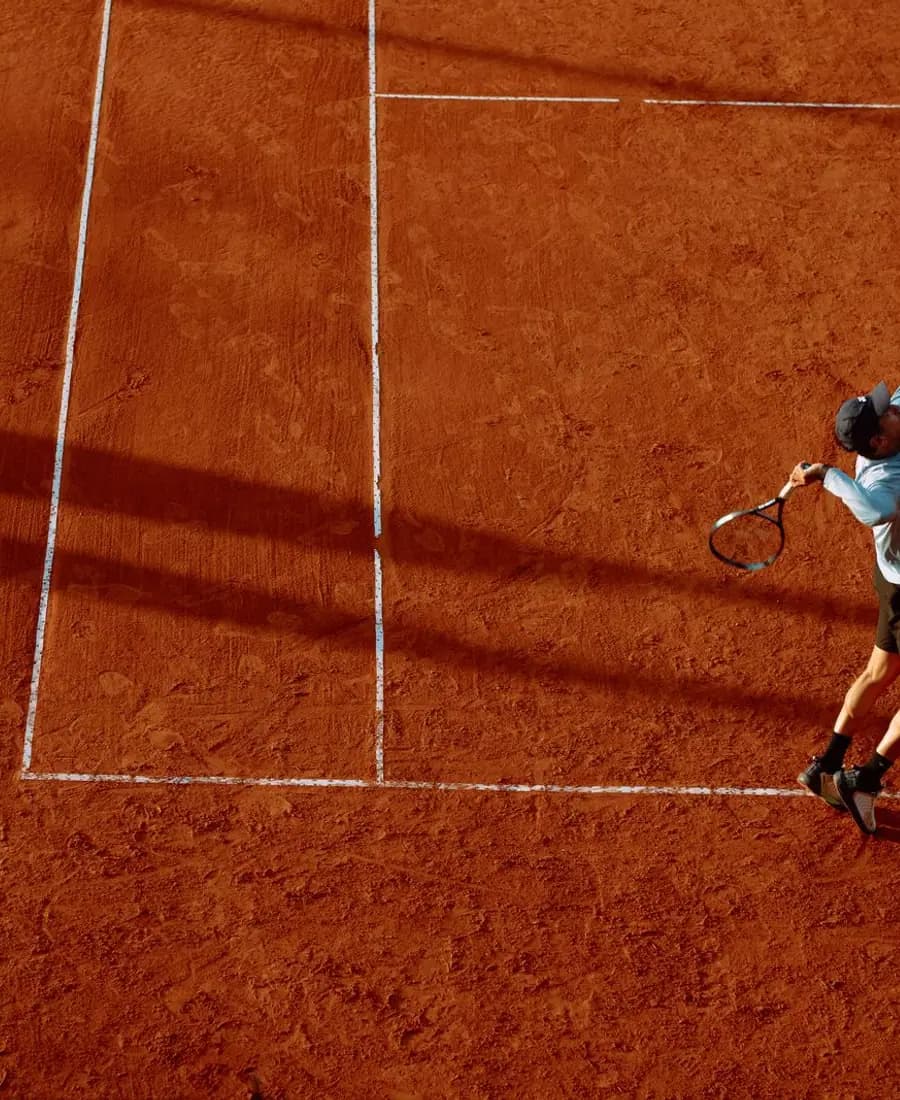
The serve gets the speed gun, the highlight reel, and the awe. The return gets a shrug. Yet a great return of serve is arguably worth more than a great serve, because it attacks the one shot your opponent controls completely and refuses to let it be a free point. The return is the most undervalued weapon in tennis, and the players who master it quietly bend the whole sport in their favor.
Why the return is so hard
The returner faces a brutal problem. They must react to a ball traveling well over a hundred miles per hour, from a serve whose direction they cannot know in advance, and put it back in play with enough quality to neutralize the server's advantage. There is almost no time to think and no margin for a full, luxurious swing.
That difficulty is exactly why the skill is so valuable. Everyone can hold serve to some degree. The player who can consistently threaten the opponent's serve games is the one who controls the match, because in tennis you cannot win without breaking serve at least once.
The three jobs of a return
A good return is not one thing. Depending on the serve, it has to do one of three jobs, and the great returners choose the right one instantly.
- Neutralize. Against a big first serve, the goal is survival: block the ball back deep, take pace off the point, and reset to neutral. A deep, boring return that lands at the server's feet is a small victory.
- Redirect. Against a moderate serve, the returner can take the ball early and send it to an unexpected corner, wrestling control of the point away from the server on the very first shot.
- Attack. Against a weak second serve, the return becomes a genuine weapon: step in, take time away, and put the server immediately on the defensive.
The scoreboard pressure of a returner who punishes second serves is immense. Suddenly the server is scared of their own second delivery, and the whole service game wobbles.
The craft of anticipation
Since there is no time to react to a fast serve purely on reflex, elite returners cheat, in the smartest possible way. They study the server for patterns: a subtle change in ball toss for the wide serve, a tell in the stance, a statistical tendency to go to the T on the big point. Great returning is great homework as much as great reflexes.
The physical craft matters too. The best returners use a compact split-step timed to the serve, a short backswing to meet the ball out front, and the legs rather than a big arm swing to generate what pace they need. It is a smaller, more controlled motion than a groundstroke, built for speed of contact rather than length of swing.
Position as strategy
Where a returner stands is a running tactical decision. Stand far back and you buy time against a huge serve, at the cost of leaving the court open and giving the server easy angles. Stand up close and you take time away from the server, at the cost of being rushed yourself. The best returners move their starting position constantly, keeping the server guessing about which trade-off they will make.
Why it decides matches
Hold your serve and a set stays level. Break serve once and the set is usually yours. That asymmetry is why the return, for all its lack of glamour, is where matches are actually won. Two players may serve equally well, but the one who returns better will break more often, and breaking more often is the whole game.
The serve starts the point. The return decides whether the server actually gets to keep the advantage they were handed. Learn to value it, and you will start watching the receiving end of every rally with new respect.