
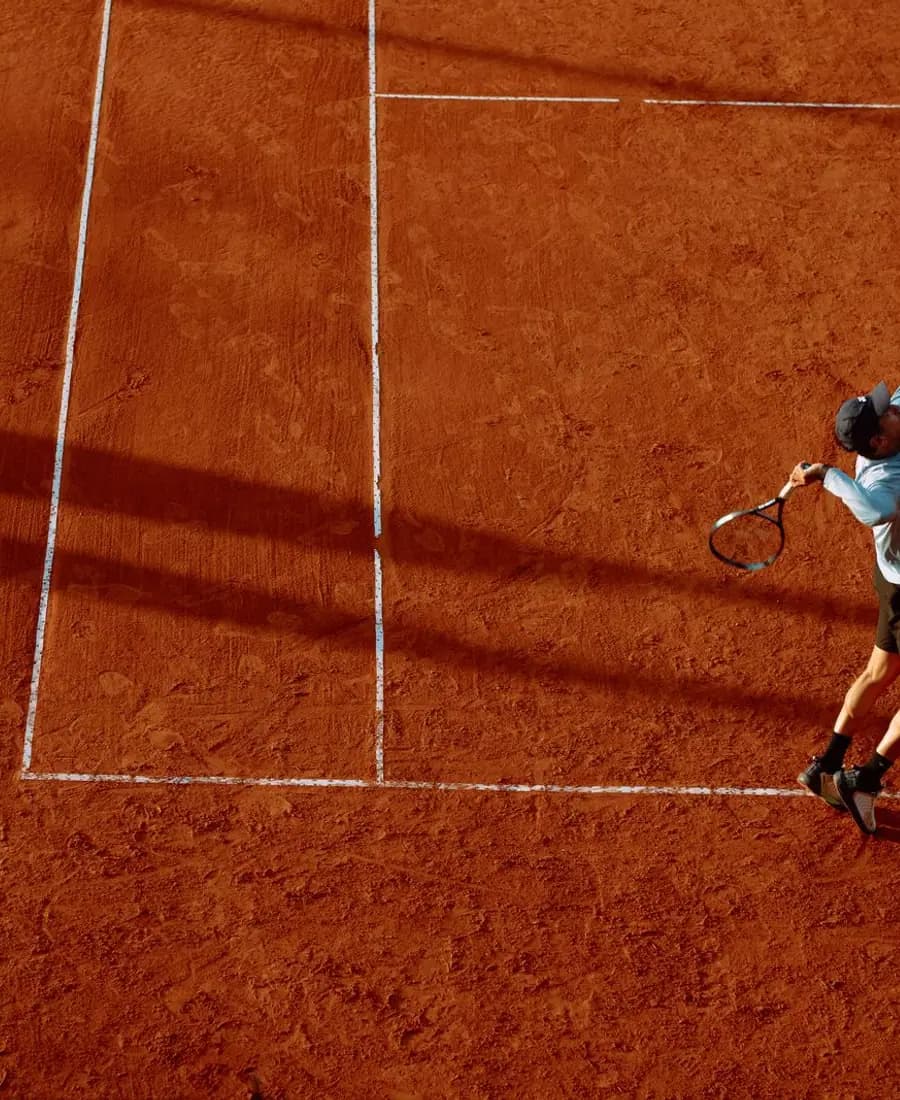
Ask a casual fan to name a great player and they will describe a weapon: a serve, a forehand, a backhand down the line. Ask a coach and they will often start with the feet. Movement is the least glamorous elite skill and arguably the most important, because a player who cannot be put away has already won half the mental battle. This is a ranking not of shotmakers but of the great defensive movers, judged on one question: how many balls did they turn from lost causes into rallies, and from rallies into wins?
The criteria
Ranking defense is harder than ranking winners, because good defense often erases the evidence. A perfectly retrieved ball just looks like a rally that kept going. So the ranking weighs three things:
- Coverage, the sheer square footage of court a player could legitimately reach.
- Recovery, the speed of getting back to a neutral position after a stretch, which is what separates a one-time save from sustained defense.
- Transition, the rarest quality: the ability to hit an offensive shot from a defensive position, turning the point around rather than merely surviving it.
That third criterion is the tiebreaker. Anyone at the top level can run. The greats convert.
Why defense is secretly offense
The deepest truth about elite retrieving is psychological. When an attacker realizes their best shot keeps coming back, something breaks. They start aiming closer to the lines, going for more than the situation requires, and the unforced errors pile up.
A great defender does not win the point by hitting a winner. They win it by making the opponent believe a winner is the only option, and then watching that belief miss the line.
This is why the best defensive movers tend to have inflated win rates in long matches. Over five sets, the attacker's patience erodes faster than the retriever's legs. Defense compounds.
The archetypes at the top
Rather than a strict one-to-ten list, the elite retrievers cluster into recognizable types, each of which deserves a place near the summit:
- The wall. Absurd coverage and recovery, content to extend rallies until the opponent cracks. Wins by attrition and by the psychological weight of relentlessness.
- The counter-puncher. Elite in defense and lethal in transition, capable of flicking a passing winner from a full stretch. The most dangerous type, because defending against them is a trap.
- The slider. Masters of surface-specific movement, especially on clay, who use the slide to reach and reset balls that would leave others flat-footed.
- The anticipator. Not the fastest in a straight line, but so good at reading the opponent's shot early that they seem to arrive before the ball does. Great movement is often great guessing.
Where movement is heading
The modern game is raising the movement bar because it is raising the pace. Faster balls give defenders less time, which paradoxically makes anticipation more valuable than raw speed. The next great retriever may not be the quickest athlete on tour. They will be the one who reads patterns fastest and recovers most efficiently, buying time with the brain rather than the legs.
That is the throughline across every era of great defenders. The court is a fixed size. The players who make it feel smaller for their opponents, and larger for themselves, are the ones who quietly bend matches to their will, one impossible retrieval at a time.