
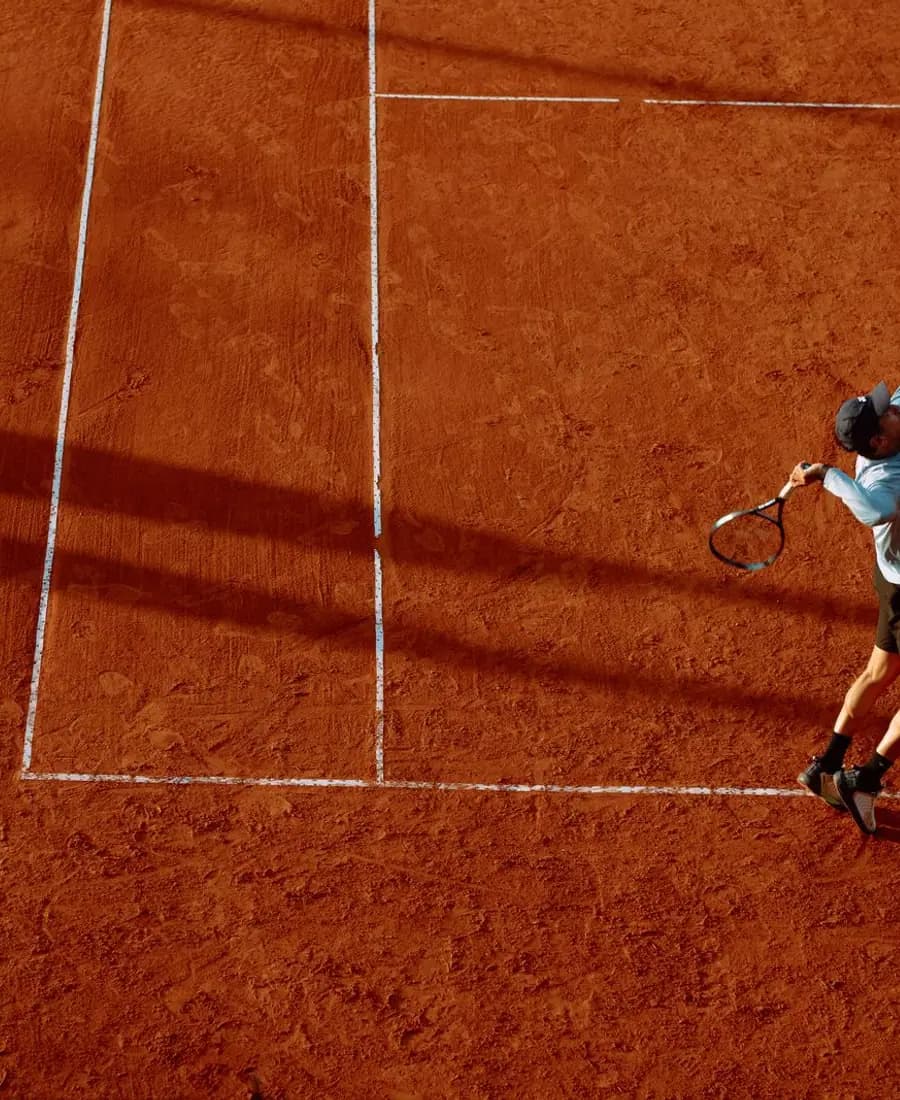
A serve looks like a test of raw power. It is really a test of geometry. The fastest serve in the world is worthless if it lands where the returner is standing, and a moderate serve placed perfectly can win the point outright. The best servers are, quietly, applied mathematicians.
The three targets
Every flat or slice serve is essentially aimed at one of three zones, and each buys something different.
- The T (down the middle, near the center service line). Shortest distance over the lowest part of the net. It pulls the returner toward the middle and opens the whole court for the next ball.
- Wide (into the outer corner). The most court-opening option. It drags the returner off the sideline and leaves a gaping cross-court target, at the cost of a longer, riskier flight path.
- The body (straight at the returner). The least glamorous and most underrated. It jams the hitting arm, denies the returner space to swing, and forces an awkward, defensive block.
Why the net height matters more than you think
Here is a piece of geometry most casual fans miss: the net is not the same height everywhere. It sags in the middle, standing lower at the center than at the posts. That is why the T serve is statistically the highest-percentage power target. You are firing over the lowest section of the net along the shortest line to the corner. Physics is on your side.
The wide serve fights that math. It travels over a higher part of the net and covers more ground, so it needs more precision and more margin. The payoff is court geometry: pull someone wide and the angles you open for the next shot are enormous.
The value of not being predictable
Serve placement is a repeated game, and repeated games reward mixed strategies. If a server always goes to the T on the big point, the returner cheats toward the middle and the T stops working. The number that actually matters is not any single placement's success rate. It is how well the server disguises and distributes across all three.
The best serve is not the fastest one. It is the one the returner did not lean toward.
This is why body serves are so valuable on pressure points. Returners spend the whole match guessing wide or T. A serve straight at the hip is the one location they are almost never braced for, and it is nearly impossible to attack.
The serve is really about the second shot
The deepest idea in serving is that placement is chosen for what it sets up, not for the ace. A wide serve is a setup for the open-court forehand. A T serve is a setup to control the middle. The elite server is thinking one shot ahead, using the serve to manufacture a predictable, attackable reply.
Think of it as a chess opening. The ace is the occasional checkmate in two, satisfying but rare. The real work is positional: dragging the opponent to a square you have already decided to exploit.
So next time you watch a big server, ignore the speed gun for a set. Watch where the ball lands, watch where the returner leaned, and watch the very next shot. That sequence, not the miles per hour, is where serving is actually won.