
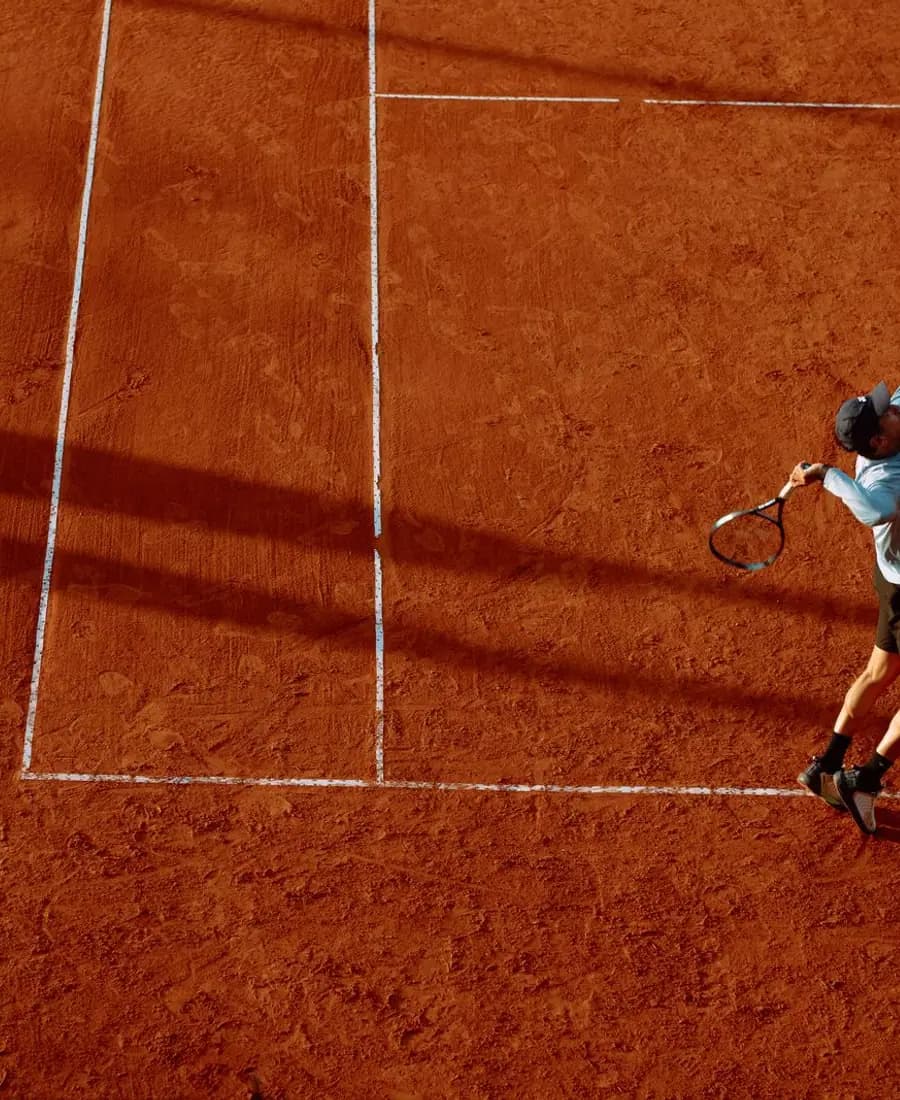
When a player wins a tight tiebreak, commentators reach for the same word: clutch. The implication is that some players possess a rare psychological gift, a gene for the big moment, and others simply lack it. It is a satisfying story. It is also mostly wrong, and the truth is far more useful if you actually want to win tiebreaks.
What a tiebreak really is
Strip away the mystique and a tiebreak is a short, high-variance sample. First to seven points, win by two. That is a handful of serves and returns, often decided by a single mini-break of two or three points.
Because the sample is small, luck plays an outsized role. A net cord that drops over, a line call, one slightly mistimed return, and the whole thing tips. Over hundreds of tiebreaks, even the sport's supposed clutch legends win only a bit more than half. That is not evidence of a superpower. It is evidence of a coin weighted very slightly in their favor.
Why the clutch story survives
Humans are pattern-finding machines, and we build narratives out of small samples. A player wins three tight tiebreaks in a big tournament and we crown them mentally strong. We conveniently forget the tiebreaks they lost, because those do not fit the story.
Clutch is usually a description we apply after the result, not a cause we could have identified before it.
This is the classic trap. If clutch were a stable trait, it would predict future tiebreaks reliably. It mostly does not. The players we call clutch are usually just very good players whose overall level shows up slightly more often in close moments, which is a different and less magical thing.
What actually moves the needle
Here is the useful part. If clutch is not a gene, then tiebreak performance is trainable. The players who genuinely raise their level in the breaker tend to do concrete, repeatable things:
- They simplify. Under pressure, decision-making degrades. Good tiebreak players shrink their options: first serve to a trusted spot, high-percentage return, no hero shots.
- They protect their serve games mentally. Because the mini-break is everything, they treat every service point as non-negotiable and take slightly less risk on return points, waiting for one opening.
- They control the tempo. Slowing down between points, controlling the breath, and sticking to a routine reduces the physiological spike that wrecks fine motor control.
- They accept variance. Paradoxically, players who understand that tiebreaks are partly luck play looser, because they are not treating every point as a referendum on their character.
The reframe that helps
The belief in a clutch gene is not just inaccurate. It is harmful, because it tells a player who loses a tiebreak that they are missing something innate and unfixable. That is a recipe for the exact tightness that loses tiebreaks.
The more accurate belief, that tiebreaks are short, noisy, and won by process rather than personality, is also the more empowering one. It says: you cannot control the coin flip, but you can control your serve target, your breathing, and your shot selection. Do those well enough, often enough, and over a career the weighted coin lands your way.
That is not clutch. It is craft, and craft is something you can build.