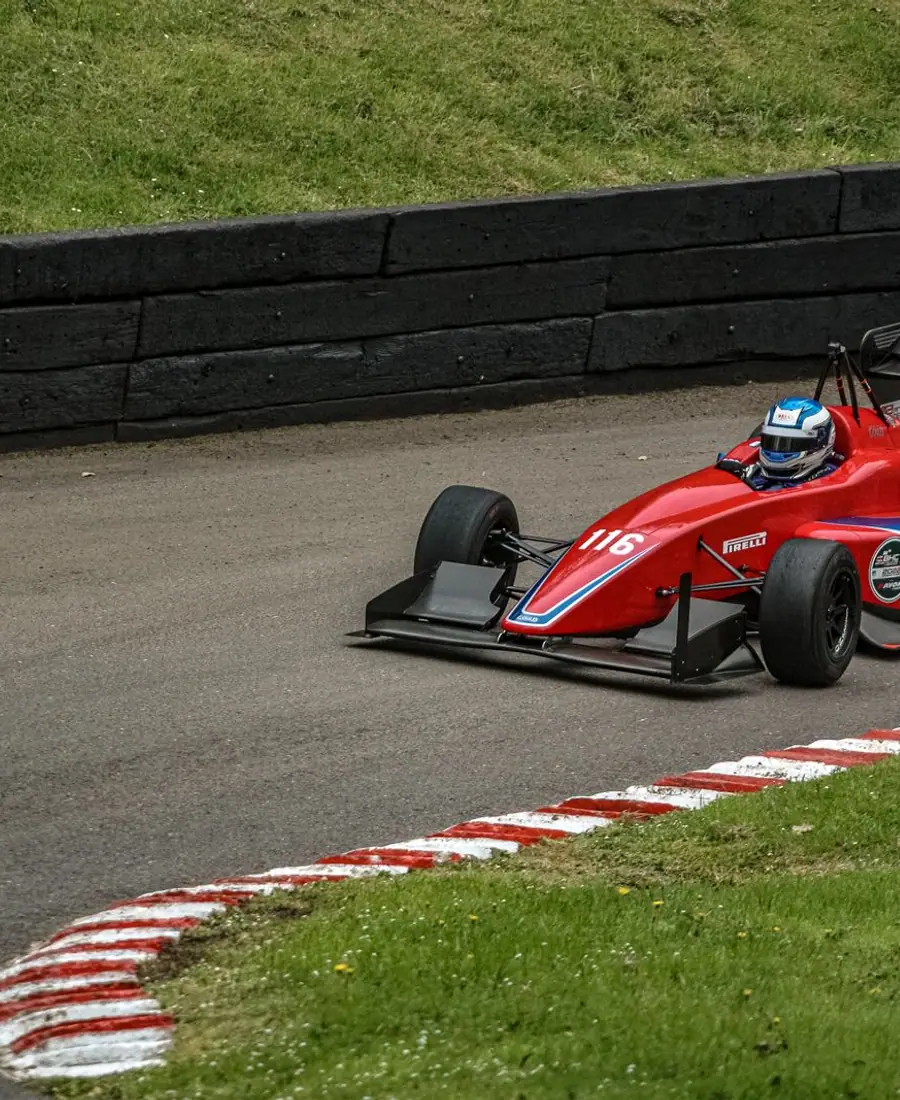
Ask a casual fan where an overtake happens and they will point to the moment one car draws alongside another. Ask a driver and they will point somewhere earlier and lonelier: the braking zone. That is where passes are actually born. The alongside part is just the birth certificate.
The pass is a braking event
Most clean overtakes on road and street circuits are decided under braking, not on the straight. The straight sets it up, the tow, the extra top speed, but the decisive act is out-braking the car ahead into the corner: braking later, or braking better, so you emerge from the corner in front.
That is far harder than it sounds. The braking zone is where the car is least stable, the tyres are working hardest, and the penalty for overdoing it is a locked wheel and a flat-spotted tyre you will nurse for the rest of the stint.
Threshold and trail
Two skills separate the drivers who can pass from the ones who only threaten:
- Threshold braking: finding the exact pressure that keeps the tyre right on the edge of locking, extracting maximum deceleration without going over. Too soft and you brake too early; too hard and you lock up and run wide.
- Trail braking: easing off the brakes gradually as you turn in, carrying that braking deep into the corner so the front tyres stay loaded and the car rotates. This is how a driver makes a pass stick on the inside, since the trailed brake holds the nose down and the line tight.
The overtaker who can trail-brake into an apex while side-by-side, without washing wide or locking up, is doing something genuinely difficult under maximum pressure.
The overlap game
A pass under braking is a negotiation conducted in tenths. The attacker needs enough overlap by the braking point that the defender can no longer simply turn in without contact. Get alongside early and you own the corner. Arrive half a car short and you are at the defender's mercy, forced to yield or crash.
Late braking is not bravery. It is precision that looks like bravery to everyone who cannot do it.
The defender, meanwhile, has their own craft: braking slightly earlier to protect the inside, then getting a better exit, daring the attacker to overcommit. The best wheel-to-wheel racing is two drivers playing this game corner after corner, each probing for the braking zone where the other blinks.
Learning the dark art
Braking well is unglamorous to practise. It is repetition, thousands of corners spent learning where the car will actually stop, what the tyre will tolerate, and how to modulate pressure by feel at a closing speed of well over 150 mph. There is no shortcut and no substitute for reference points burned into muscle memory.
That is why the great overtakers so often look calm doing something terrifying. They are not braver than everyone else. They have simply spent longer than everyone else learning the one place where races are decided, and where most drivers, quietly, brake a fraction too soon.