
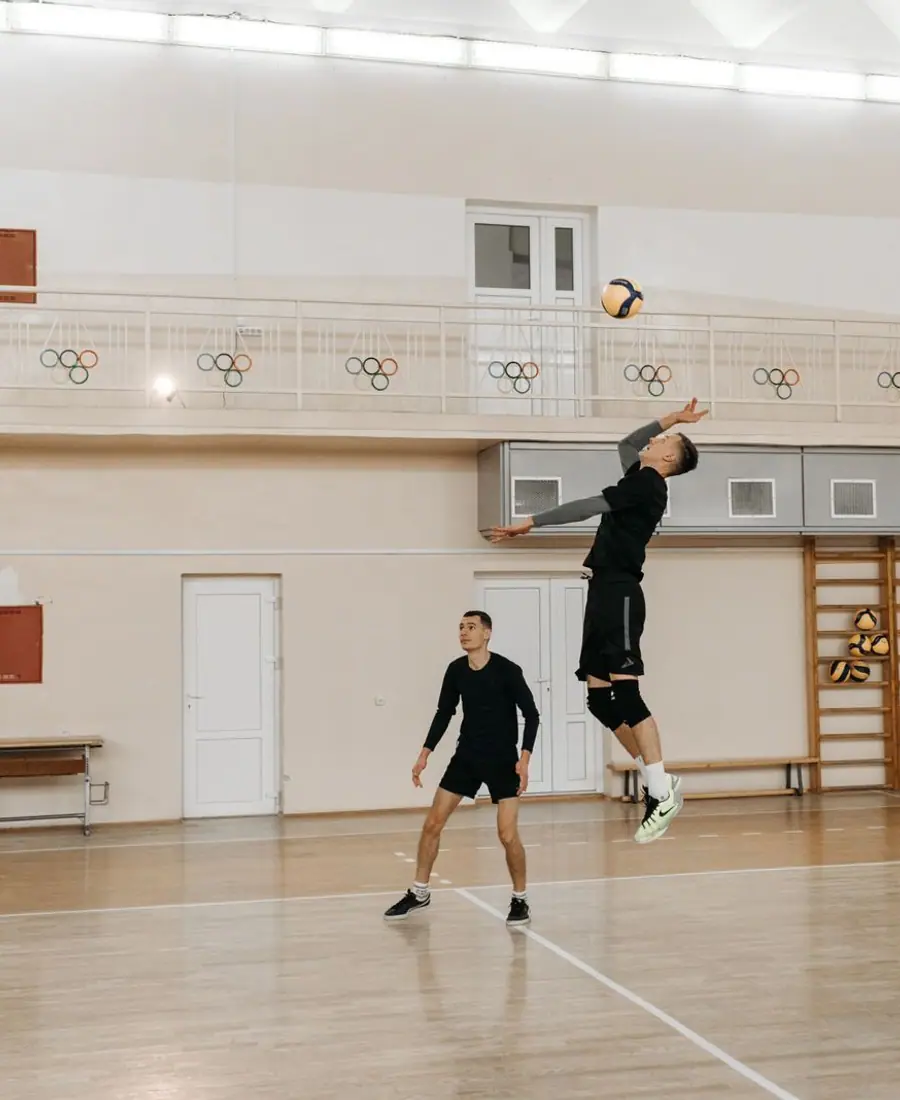
The serve is the only moment in volleyball when one player controls the ball completely, with no opponent interfering. It is a free shot. And the two main ways to take that shot, the float and the jump serve, represent two entirely different philosophies of pressure.
The float serve is engineered chaos
A float serve is struck with almost no spin. That is the whole trick. A spinning ball has a stable, predictable flight because the spin evens out the airflow around it. A ball with no spin does the opposite. The air separates from its surface unevenly and shifts moment to moment, making the ball wobble, dip, and dart late in its flight.
For the passer, a good float is maddening precisely because it is unpredictable. You cannot read the flight early because the flight itself is unstable. The ball can drop suddenly a meter in front of you or sail an extra foot past your platform.
- Contact must be clean and centered, with a firm, still wrist and no follow-through spin.
- The server hunts seams and short zones where indecision is worst.
- Speed is moderate; the weapon is deception, not velocity.
The jump serve is applied force
The jump serve is the opposite bet. The server tosses the ball high in front of the court, approaches like an attacker, and hits it with topspin and full arm speed. The result is fast and heavy, arriving before the passer has finished setting their feet. Topspin drives the ball down hard and keeps it in the court despite the speed.
The float asks a passer to solve a riddle. The jump serve simply does not give them enough time to think.
The cost is risk. A jump serve is far harder to keep in, and a missed jump serve is a free point handed to the opponent. Teams live with that risk because the reward is an ace or, more often, a broken pass that neuters the other team's offense.
Choosing your poison
Smart servers and coaches treat the choice as situational. Early in a set, or when protecting a narrow lead, a server may float to stay safe and keep pressure without gambling. When a team needs to break serve, disrupt a hot opponent, or steal momentum, the jump serve comes out, accepting the higher error rate for the higher ceiling.
The most dangerous servers can do both and disguise which is coming, mixing a heavy jump serve with a floating jump-float that looks identical on the toss. The passer, forced to prepare for power and chaos at once, is beaten before contact. In the end, both serves attack the same thing: the passer's certainty. One removes it with unpredictability, the other with time. Great serving is simply knowing which weapon the moment calls for.