
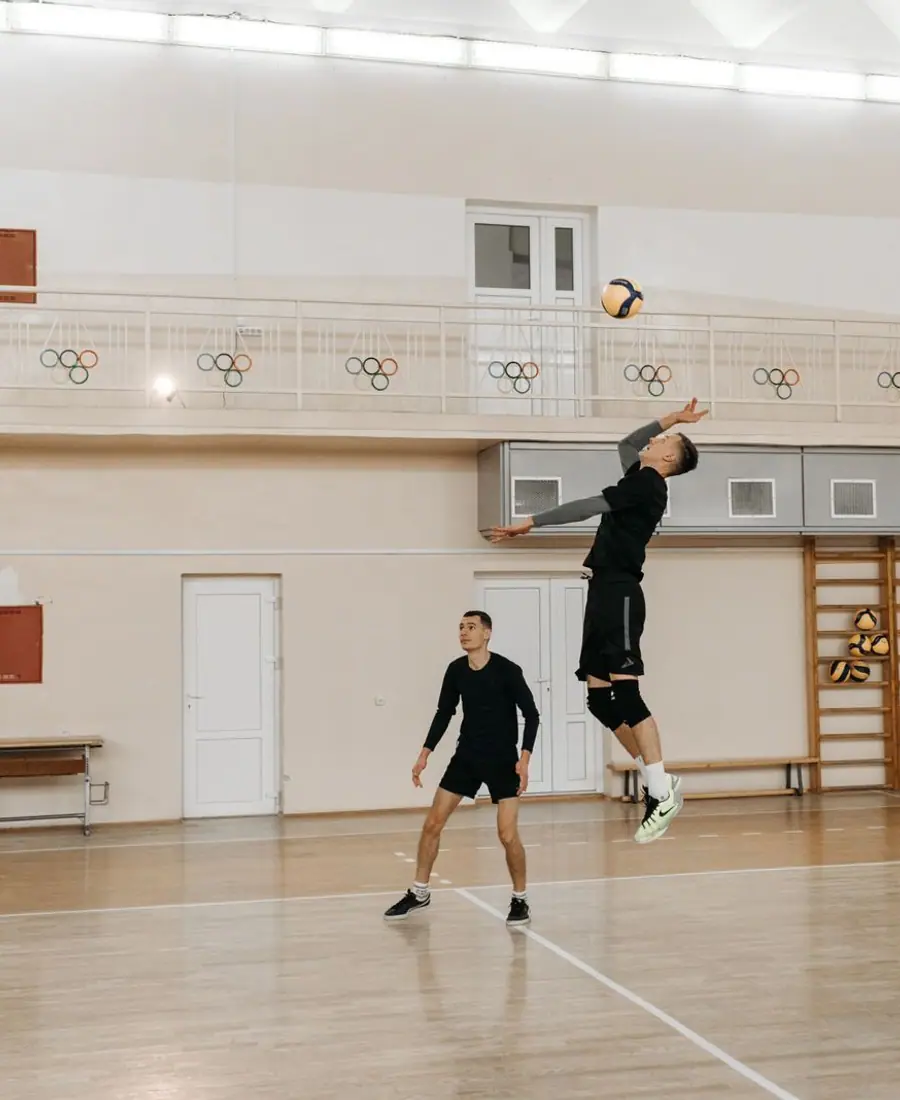
Nothing changes a volleyball match faster than a serving run. One player steps to the line and, over the next two minutes, delivers six, eight, ten serves the other team simply cannot handle. A tie becomes a rout. A crowd goes from tense to delirious. These runs are the closest thing the sport has to a knockout blow, and the greatest of them share an anatomy worth understanding.
A run is a pressure loop, not a single serve
The first thing to understand is that a serving run feeds on itself. A tough serve produces a bad pass. A bad pass forces the opponent out of system, into a predictable high set the block can load up on. The block or defense wins that rally, the same server serves again, and now the receiving team is rattled as well as out of position. Each serve makes the next one more effective. The run is a loop, and the server is spinning it faster with every contact.
A serving run is not ten great serves. It is one great serve whose consequences the opponent cannot escape before the next one arrives.
The anatomy of the great ones
Look at the serving stretches fans remember and a pattern emerges. They are rarely just about velocity.
- Relentless targeting. The server finds one passer, or one seam, and returns to it without mercy until the opponent proves they can handle it.
- Just enough margin. Great runs balance risk and reliability. The server is aggressive but not reckless, keeping the ball in while still applying maximum discomfort.
- Disguise. The best servers make a heavy jump serve and a floating jump-float look identical on the toss, so the passer cannot commit early.
- Timing. The most devastating runs come at the moment of maximum leverage, late in a tight set, when a rattled opponent has the least room to recover.
Why control outlasts power
It is tempting to think the greatest serving runs come from the hardest hitters. Often they do not. A serve that is a fraction slower but lands precisely on a seam, again and again, does more damage than a rocket sprayed near the middle of the court. Power without a target lets the passer settle. Control without mercy never does.
That is the quiet lesson of the greatest serving stretches. They are exercises in applied pressure, not brute force. The server treats the opponent's serve-receive like a structure with a weak beam, and hits that beam over and over until the whole thing buckles. When you next see a match flip on a run of unanswered serves, watch where the ball is going, not just how hard. You will almost always find one server calmly attacking one weakness, trusting the pressure loop to do the rest. That is the craft behind the sport's most sudden and spectacular swings.