
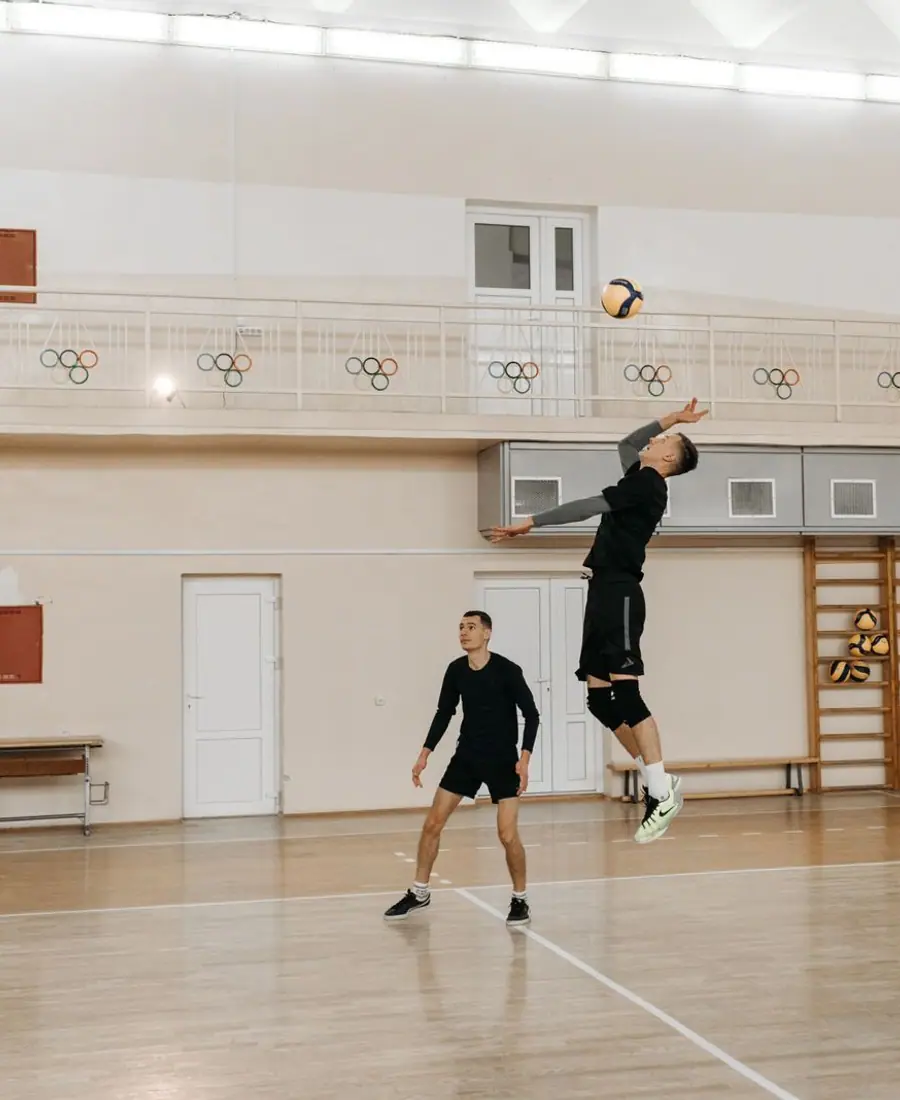
Ask a casual fan what a setter decides and they will say who gets the ball. That is only half of it. The deeper decision, the one that actually beats the block, is when the ball arrives. Volleyball offense runs on tempo, and a setter who commands tempo can pull a well-drilled block out of position without the block ever touching the ball.
The three tempos
Sets are classified by how fast they get to the hitter relative to the setter's contact.
- First tempo is the quick. The hitter is already in the air, arm cocked, as the setter releases. The ball travels a short, fast arc. There is almost no time for the block to react.
- Second tempo is a middle speed. The set peaks a beat after release, and the hitter times their approach to meet it. It is the balance of speed and reliability.
- Third tempo is the high ball, the classic outside set that hangs for over a second. It is slow and predictable, but it is hittable from almost any pass, which is why it is the go-to when a play breaks down.
Why tempo, not location, beats the block
Here is the mechanism. The opposing middle blocker has to honor the fastest threat first. If a first-tempo quick is live, the middle must commit to it, jumping with the quick hitter or at least freezing to defend the middle. The instant the middle commits there, they cannot also help block the outside or the slide.
A setter running a fast middle is not trying to score with the quick every time. They are using it as bait to freeze the block, then setting somewhere the block can no longer reach.
This is why a live quick attack makes an entire offense better. Even when the middle does not get the ball, the threat of the quick holds the opposing middle blocker in place, isolating the outside and opposite hitters against single blockers. Tempo is leverage.
Reading a setter through tempo
Once you watch for it, tempo tells the whole story of an offense. A setter facing a perfect pass has all three tempos available and can run the fast options that stress the block. A setter facing a bad pass is forced up to third tempo, the slow high ball, and the block knows exactly where and when to go.
That is the through-line connecting passing, setting, and attacking. Good passing unlocks fast tempo. Fast tempo freezes the block. A frozen block isolates the hitters. A great setter is the conductor of that sequence, choosing not just a target but a rhythm, using the quick to bait, the slide to stretch, and the high ball to survive. Learn to watch the clock of an offense rather than just its map, and you start to see the setter's real craft: not deciding who hits, but deciding when, and letting the timing do the work the block cannot answer.