
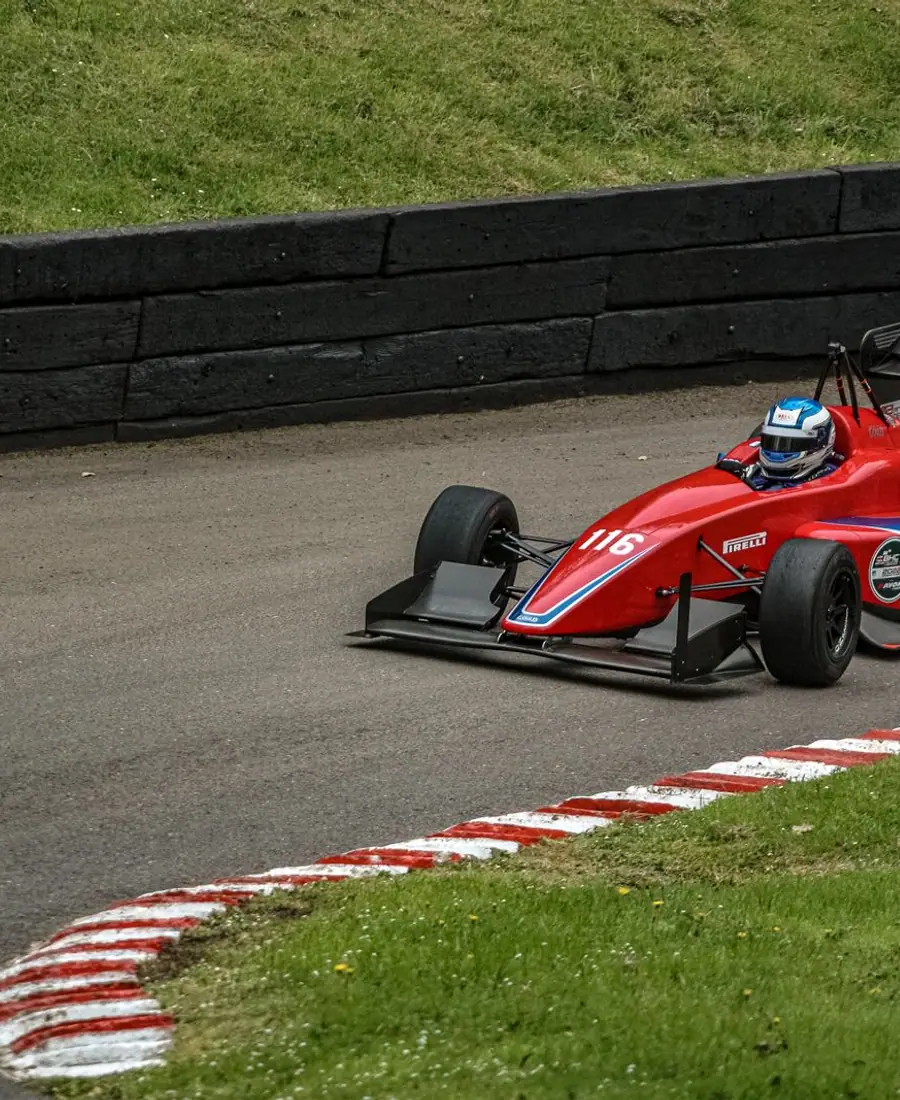
IndyCar's hybrid system added a lever to the cockpit, and like every lever in racing, its value is entirely in the timing. Deploying the boost is easy. Deploying it where it actually changes the outcome, while harvesting the energy back without bleeding lap time, is the tactical game the paddock is still learning to play.
Two ways to fill the tank
Before a driver can spend energy, they have to gather it, and there is a cost to how they do it. Broadly, energy comes back to the system through recovery under braking and deceleration. The tactical wrinkle is that harvesting is not free. Pulling energy back can subtly change how the car slows and behaves, so the driver has to choose where to gather it without upsetting the corner.
The skill is in harvesting where it costs you nothing:
- In braking zones where you were shedding speed anyway.
- On sections where a small pace compromise is invisible to the stopwatch.
- Never in a place where losing that energy costs you a corner exit onto a long straight.
Deploy where it counts
Spending the energy is the visible half, and the same principle governs it: deploy where the return is highest. That is almost never simply the longest straight. It is wherever extra power converts into track position:
- Onto a straight that feeds a heavy braking zone, where the added speed stretches your run and lets you out-brake a rival.
- On corner exit before a long full-throttle section, where the boost compounds all the way down the straight.
- Defensively, to cover a run that would otherwise leave you passed.
The driver who deploys on the longest straight looks fast. The driver who deploys onto the straight that ends in an overtaking spot actually gains a place. They are not the same driver.
Layering it onto everything else
Here is what makes the hybrid genuinely hard. It does not replace the older decisions; it stacks on top of them. A driver on a road course is already managing fuel, tyres, and push-to-pass. Now add energy harvest and deployment to the same brain, on the same lap, at the same speed. The teams that win the hybrid era will be the ones who integrate all of it into a single coherent plan rather than treating energy as a separate toy.
The oval wrinkle
Ovals change the calculus entirely. There are fewer heavy braking zones to harvest from, straights are effectively continuous, and the aerodynamic draft already governs who can pass. Deployment on an oval becomes less about a single decisive overtake and more about sustaining position in a pack, or timing a run on a restart. The very same hardware asks a completely different tactical question depending on the track, which is exactly the kind of complexity that rewards the smartest teams and punishes the laziest.
Deploy, harvest, repeat sounds mechanical. It is anything but. It is a rolling series of judgement calls, dozens of times a lap, about where a finite pool of energy is worth the most, and the drivers who answer that question best are quietly rewriting how IndyCar races are won.