
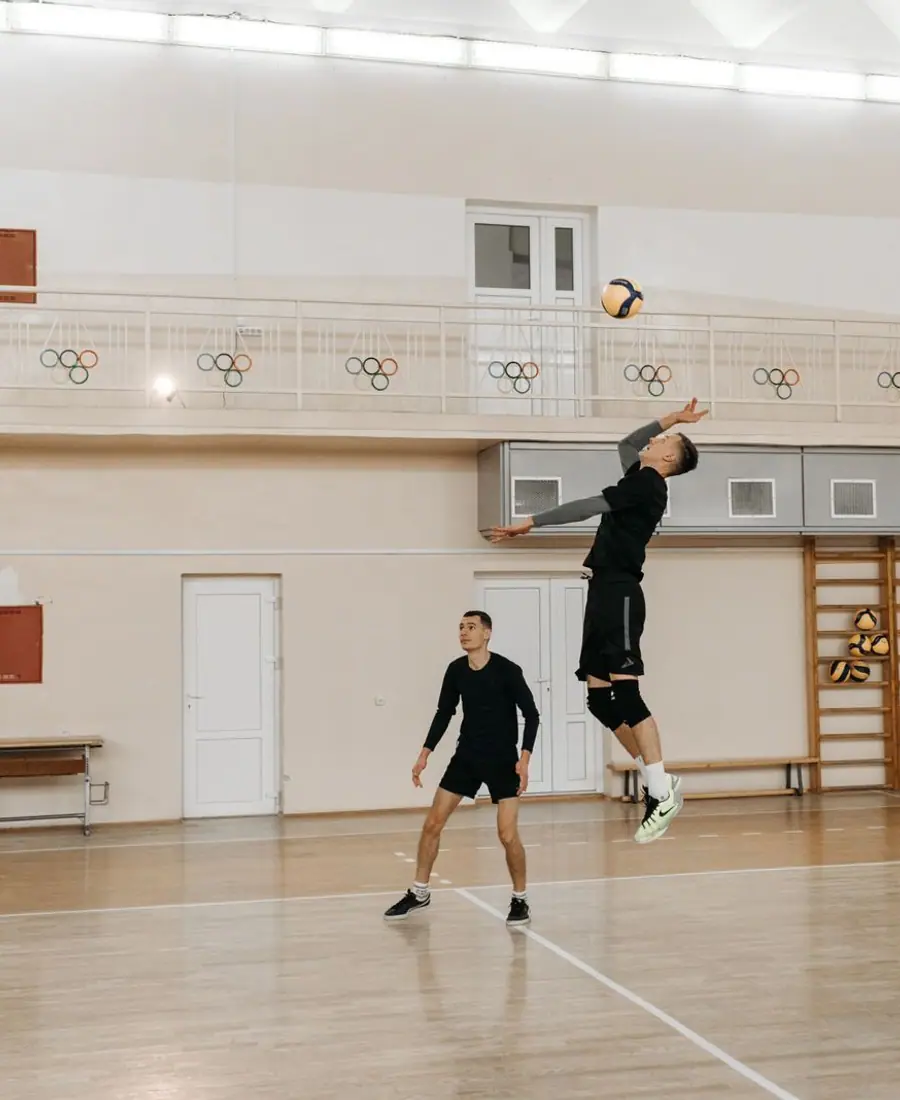
Volleyball can look like six people milling around until the ball comes over, then briefly organizing into something. Once you know the positions, though, the pattern snaps into focus. Here is the plain-language guide to who does what and why the roles fit together.
The playmakers and the finishers
Setter. The setter is the point guard. Their job is to take the second ball and deliver it to an attacker, choosing who hits and how fast. Every offense runs through them. A great setter makes average hitters look good by giving them clean, hittable balls and by tricking the block about where the ball is going.
Outside hitter. Also called the left side, the outside is the offense's workhorse. They attack from the left antenna, pass in serve-receive, and play back-row defense. Because they hit from the highest, most reliable set, they carry the offense when a play breaks down.
Opposite. The opposite, or right side, plays across from the setter and often carries the biggest attacking punch. They hit from the right, block against the other team's best outside, and usually do not pass in serve-receive, which frees them to focus on scoring.
The middle and the defenders
Middle blocker. The tallest players usually live here. Middles run fast quick attacks and, more importantly, anchor the block, sliding along the net to stop the opponent's hitters. Their game is about timing and reading the setter faster than anyone else on the court.
Libero. The back-row specialist in the different-colored jersey. They cannot attack above the net or block, but they are the best passer and digger on the team, on the floor for every back-row rotation.
Defensive specialist. A cousin of the libero, the DS is a back-row substitute brought in to shore up passing and defense, but without the libero's special substitution rules.
Think of it as a small orchestra. The setter conducts, the hitters play the loud parts, and the libero holds the rhythm so the whole thing does not fall apart.
How the roles fit together
The positions are designed around a simple flow: get the first ball up (passers and libero), deliver it (setter), and put it away (hitters). Every rotation reshuffles who is in the front and back row, so most players need more than one skill. An outside hitter has to pass and defend as well as attack. A middle has to block and hit. Only the setter and libero are true single-focus specialists, and even they touch the ball constantly.
Once you can name the six roles, watching volleyball changes. You stop seeing six people reacting to a ball and start seeing a system, each player with a job, handing the ball off in sequence until someone finishes the point. That handoff, pass to set to hit, is the heartbeat of the sport.