
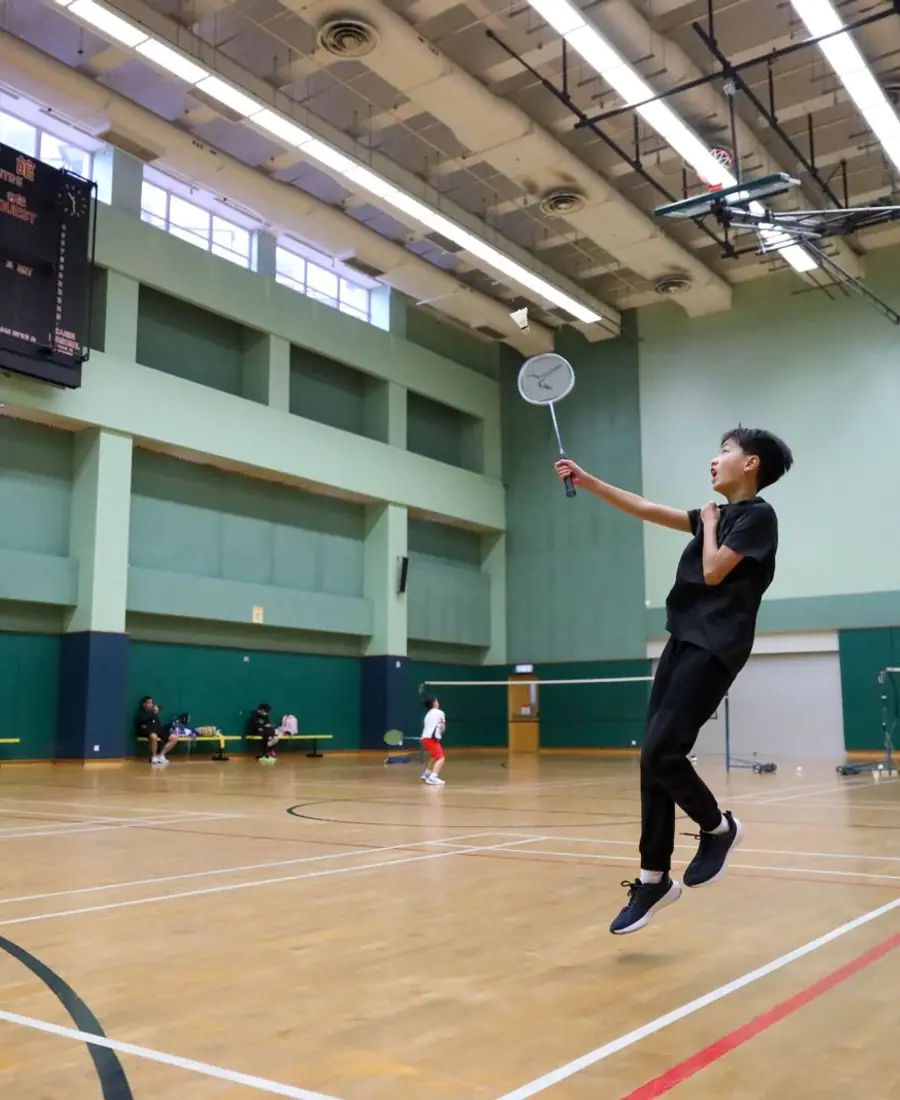
The highlight reel lies to you. It shows the diving winner and hides the six shots that made it inevitable. Rally construction is the invisible skill — the ability to see a point not as a series of individual shots but as a sentence with a beginning, a middle, and a punchline you set up in advance.
Openings Are About Length, Not Power
Early in a rally, the constructor isn't trying to win. They're trying to establish control, and control comes from length. A deep, accurate clear or a tight net shot pins the opponent to a corner and forces a predictable reply.
Good length does two quiet things:
- It pushes the opponent behind their base, so their next shot is defensive by default.
- It buys you time to recover to a strong central position, ready for anything.
Amateurs try to hit a winner from the opening exchange and hand over easy points. Constructors are patient. They know a rally won on the third shot was really set up on the first.
The Middle Game: Move, Don't Just Hit
The middle of a rally is where you manufacture the opening. The principle is simple to state and hard to do: move your opponent to the corner farthest from where you intend to win the point.
If you want to smash into the open forehand, you first drag them to the backhand rear corner. The winner isn't the smash — it's the shot before it that created the space. Elite players think one shot beyond the one they're hitting. They're not asking "can I win with this shot?" but "what reply does this force, and can I win off that?"
A rally is a conversation where you're trying to make your opponent say the one word you're waiting for.
Tempo Is a Weapon
Length and angle move the body. Tempo moves the mind. Changing the speed of the rally — slowing it with high clears and dropshots, then suddenly injecting pace with a flat push or half-smash — disrupts an opponent's rhythm and footwork timing.
Many points are won not by a spectacular shot but by a sudden change of pace that catches an opponent mid-recovery, off-balance and reaching. The half-smash, in particular, is a constructor's favourite: not fast enough to be a clean winner, but fast enough to force a weak lift that sets up the real finish.
Recognising the Opening
All this construction is pointless if you don't recognise the moment to strike. The signal is usually a shot that lands short, a lift that floats, or an opponent caught out of position. That's the loose brick in the wall.
The discipline is to attack only when the opening is real. Firing a smash at a well-defended shuttle just resets the rally and drains your energy. Waiting one more shot for a genuine opening is the difference between a highlight and a wasted lung-full of effort.
Train the Pattern, Not the Shot
Instead of drilling single strokes, drill sequences: clear to the backhand corner, drop to the forehand net, then push to the open court. Repeat until the pattern is automatic. Then you'll stop reacting to the rally and start writing it — three shots at a time.