
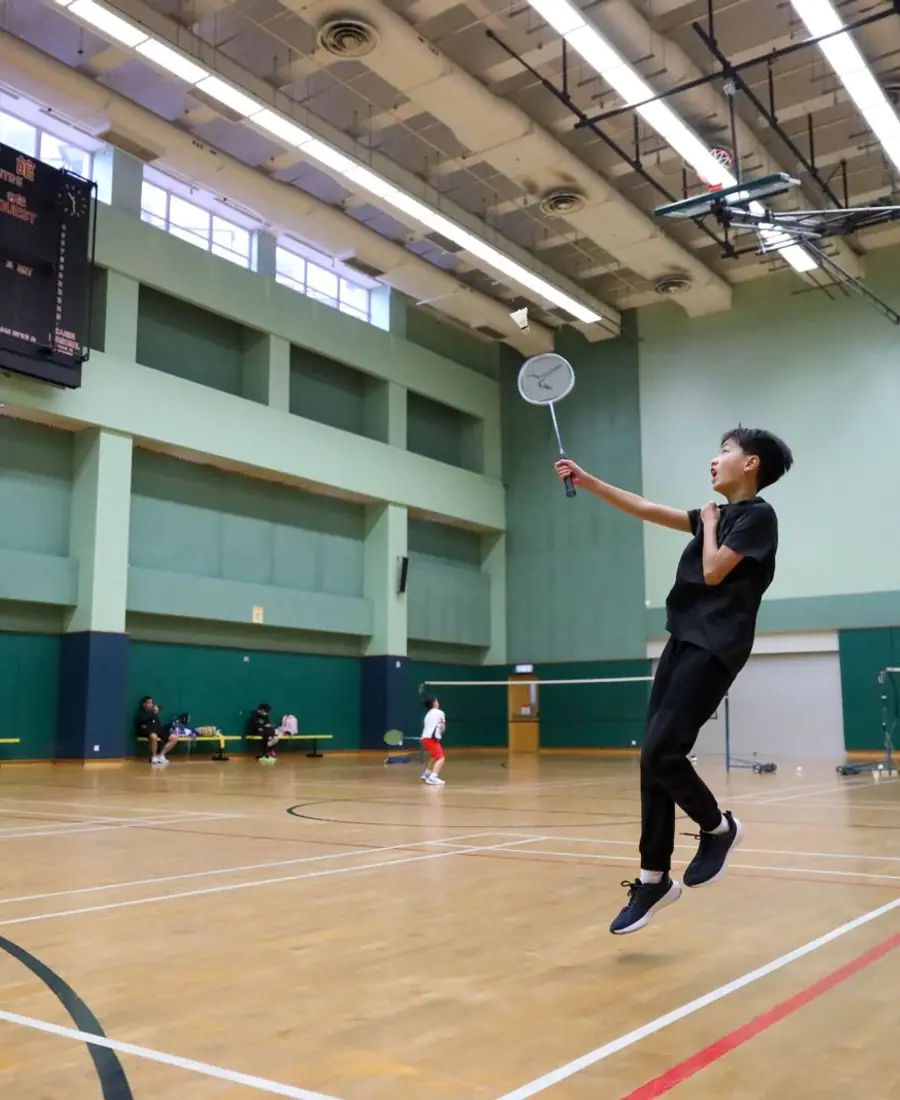
If you filmed a top player's feet and slowed it down, you'd notice something odd. Just before every shot their opponent hits, they do a tiny hop and land wide and low — and then explode toward the shuttle. That hop is the split step, and it's the closest thing badminton has to a universal secret.
Why a Hop Makes You Faster
It seems backwards. To move faster, you first jump in place? The physics is the point. When you land from the split step, your muscles are pre-loaded and stretched, storing elastic energy like a compressed spring. Pushing off from that loaded position launches you in the chosen direction far faster than starting from flat, static feet.
A player standing still has to overcome inertia before they even begin to move. A player landing from a split step is already in motion — they just redirect it. On a court where the shuttle can cross the net in a fraction of a second, that head start decides who reaches the shot in balance and who arrives late and lunging.
You can't react to a shuttle you're standing flat-footed for. The split step is how you're moving before you consciously decide to.
Timing Is Everything
The most common mistake isn't failing to split step — it's mistiming it. The split step must be timed to your opponent's contact with the shuttle, not to any fixed rhythm of your own.
The sequence is:
- As your opponent begins their forward swing, you rise slightly onto the balls of your feet.
- The instant they make contact, you land into your wide, low, loaded stance.
- As you read the shot's direction, you push off explosively toward it.
Split too early and you've landed and re-planted before they hit, losing the spring. Split too late and you're still in the air when you should already be moving. The land must coincide with contact.
The Shape of a Good Split
A useful split step has a specific posture:
- Feet slightly wider than shoulders for a stable, spring-loaded base
- Knees bent, weight forward on the balls of the feet
- Racquet up and in front, ready to travel
- Body relaxed, not tense — tension kills the elastic recoil
A stiff, narrow, upright split does nothing. The value is entirely in the loaded, athletic landing.
Making It Automatic
Beginners split step consciously and forget under pressure. The goal is to make it a reflex you couldn't switch off if you tried. Two drills help.
First, shadow footwork with a metronome partner: they clap to simulate contact, and you split-land exactly on the clap, then push to a corner. This trains the timing link between their action and your landing.
Second, play practice rallies where your only focus is the split step — ignore shot quality entirely and just obsess over landing on every contact. It'll feel clumsy for a week, then it disappears into your game and never leaves.
Most recreational players never learn this. They chase the shuttle from a standstill and wonder why they're always a step slow. The split step won't add a single centimetre to your reach, but it'll make the reach you already have arrive on time. In badminton, on time is everything.