
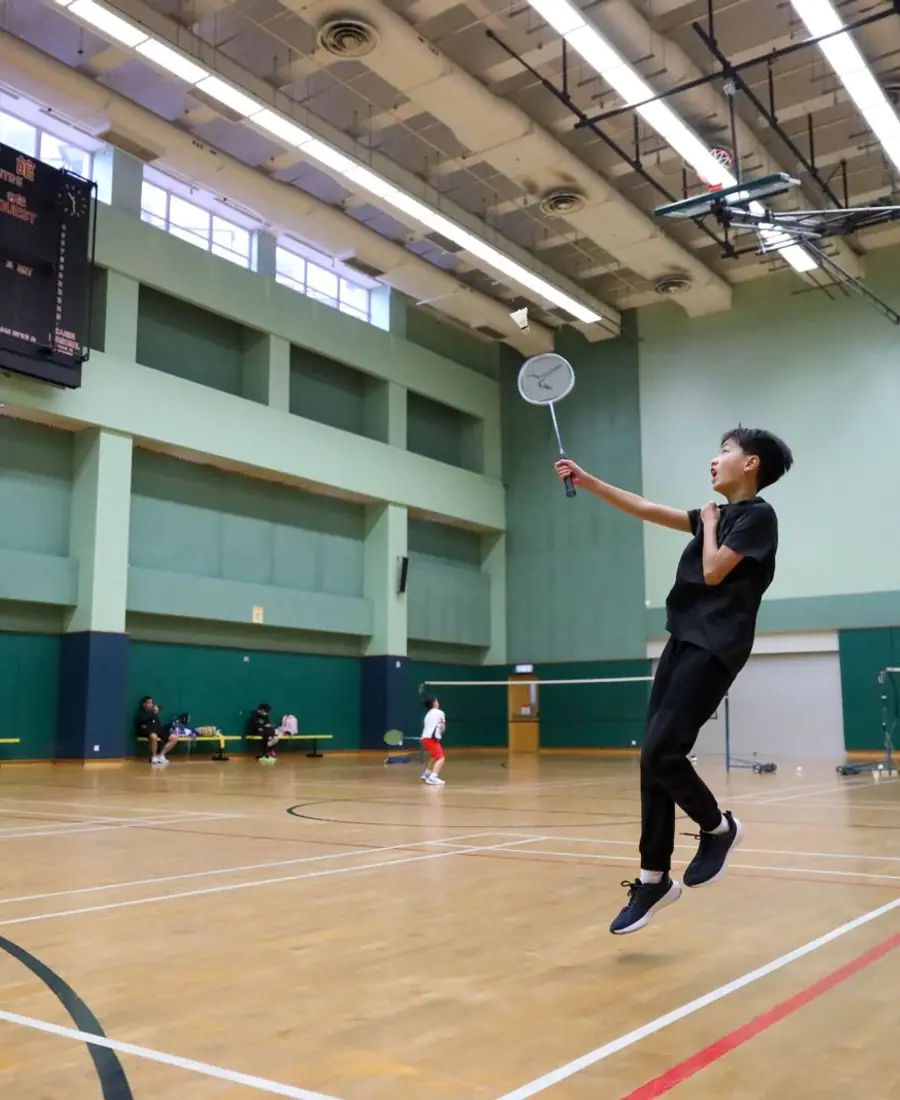
In doubles, the back-court player gets the glory. They hit the smashes, they finish with power, they end up on the highlight reel. But ask any experienced pair who really controls a match, and they'll point to the front. The net player is the position everyone underrates and every good team depends on.
The Job Description
The front-court player in an attacking formation has a role that sounds simple and is fiendishly demanding: own the net. When their partner is smashing from the back, the net player's job is to intercept and finish everything the smash forces up.
Concretely, that means:
- Killing loose net replies before the opponents can recover
- Intercepting flat drives and blocks aimed to get past them
- Covering the pushes through the middle that try to split the pair
- Pressuring the opponents so hard that they can't play tight net shots
That last point is the subtle one. A great net player wins points they never even touch, simply by being such a threat that opponents are forced to lift instead of playing a net reply — handing the attack straight back to their partner at the rear.
The best net players are measured less by what they hit than by what they prevent. A shuttle that gets lifted because of your presence is a point you helped win without swinging.
The Skills It Demands
The net position rewards a specific and unglamorous skill set. It's not about power — it's about hands, anticipation, and positioning.
Fast hands above all. The forecourt is where reaction time is shortest, so the net player must produce a compact, instant tap from a racquet held up and ready. There's no time for a backswing.
Anticipation. Because they can't react to everything, good net players read the smash direction off their partner and the opponent's racquet face, and pre-position to poach the likely block.
Racquet-up discipline. The defining posture of the role is the racquet held up and in front at all times, weight forward, ready to stab down the instant a shuttle floats above the tape. A net player caught with their racquet down is a net player about to concede.
Restraint and reading. Knowing when to poach and when to hold, when to kill and when to play tight, is a tactical intelligence that separates good net players from reckless ones.
The Mindset
There's a temperament to the position, too. The net player has to be comfortable being unglamorous — doing the quiet work that lets their partner shine. They have to be brave enough to poach and steal shuttles that risk leaving a gap, but disciplined enough not to gamble away good position.
And they have to be a communicator. Rotations in doubles happen in a heartbeat, and the net player is constantly calling and reading whose shuttle it is, when to switch, when to hold. The front of the court is a place of split-second decisions made in partnership.
Why It's Underrated
The net player is underrated for the same reason a great defensive midfielder is: their best work is invisible on the scoresheet. They don't hit the winners; they create the conditions for the winners. But watch a pair whose net player is off their game, and you'll see the whole structure wobble — the opponents play tight, the attack breaks down, the pressure evaporates.
Control the net, and you control the match. The player who does that quiet, relentless work at the front deserves a lot more credit than the highlight reel gives them.