
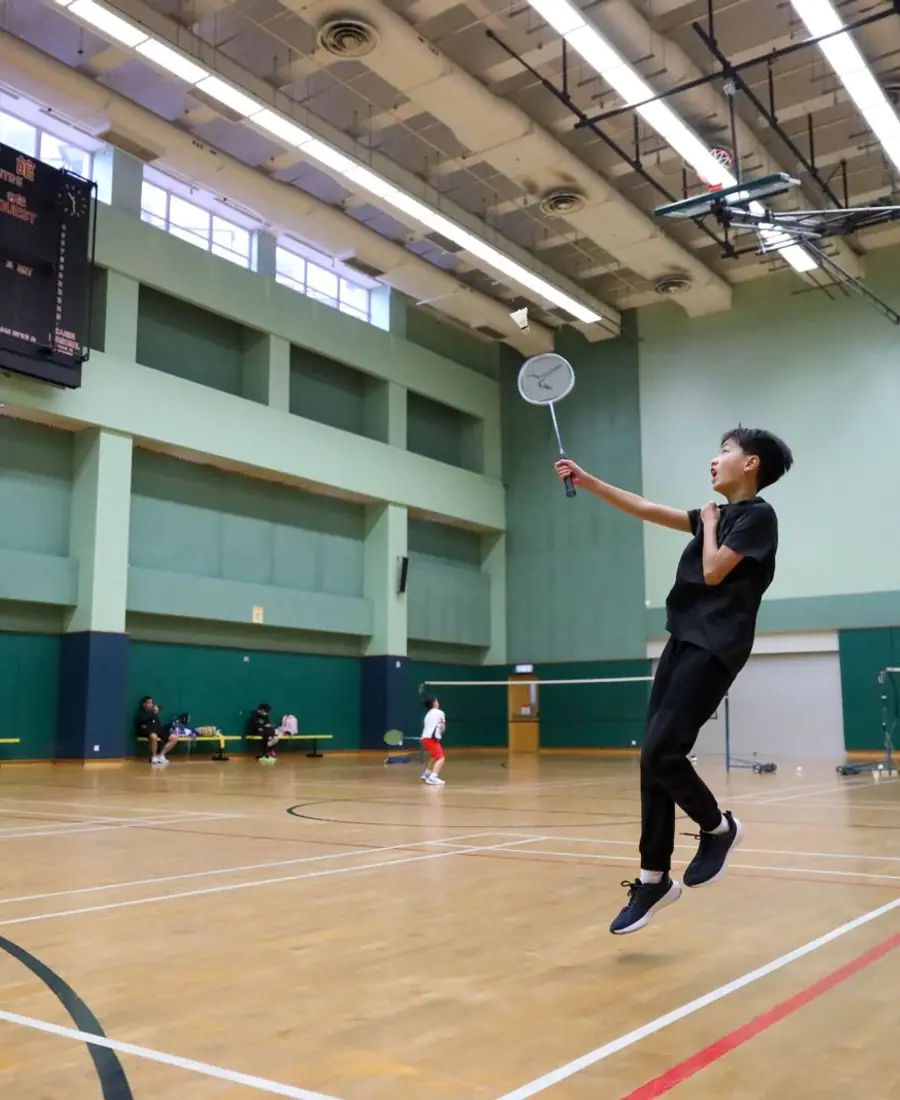
Some badminton shots are about setting up the point. The net kill is about ending it. When an opponent's shuttle floats even slightly above the tape, the net kill is the punctuation mark — a short, downward stab that gives them no chance to reply. It looks effortless. It isn't.
Why It's So Deadly
The net kill exploits the geometry of the forecourt. Struck from just above the net, the shuttle only has to travel a tiny distance downward to hit the floor inside the opponent's court. There's almost no airtime, so there's almost no reaction time. Where a smash from the back gives a defender a fraction of a second, a net kill gives them essentially nothing.
That's why it's the most efficient winner in the game. You're not overpowering anyone — you're using the shortest possible path and the steepest possible angle to make the point unreturnable.
The net kill isn't a hard shot to hit. It's a hard shot to be ready for. The difficulty is all in the preparation.
Readiness Is the Whole Game
The defining feature of a good net player isn't reflexes — it's posture. Because the opening at the net appears and vanishes in an instant, you have to already be prepared when it comes.
- Racquet held up and in front of the body, never resting down by your side
- Weight forward, on the balls of the feet, ready to lunge in
- Eyes on the opponent's racquet to read whether the reply will float
- A relaxed grip that can tighten in an instant
If your racquet is down when the loose shuttle appears, you're too late — no matter how quick your hand is. The kill is won by the player who was already holding the racquet where the shot would be played.
The Technique: Short and Sharp
The stroke itself is the opposite of a smash. There is no big swing. It's a compact, punchy action driven almost entirely by the forearm and a squeeze of the fingers at contact.
The sequence is simple: from your racquet-up ready position, take the shuttle as early and as high as you legally can, and stab downward with a short, fast tap. A long backswing is fatal here for two reasons — it's too slow, and it risks a swing that carries your racquet over into the net or crosses the plane. Compact wins.
Grip matters too. Use a relaxed grip that lets the racquet face point where you want, and tighten only at the moment of contact for a crisp, controlled tap. Overgripping the whole time makes the wrist stiff and the shot wooden.
Choosing Where to Kill
A good kill isn't just downward — it's placed. Against a single defender, killing straight down at the body is brutal because it jams their racquet. Against a doubles pair, aiming at the gap between them or at the outside hip forces a hurried, weak reply if they get to it at all.
And know when not to kill. If the shuttle is even slightly below the tape, the angle isn't there, and forcing a kill sends it into the net. In that case, a tight net shot or a push is the disciplined choice.
Drill it by having a partner feed deliberately loose net shots while you focus only on racquet-up readiness and an early, compact tap. Master the readiness, and the kill takes care of itself.