
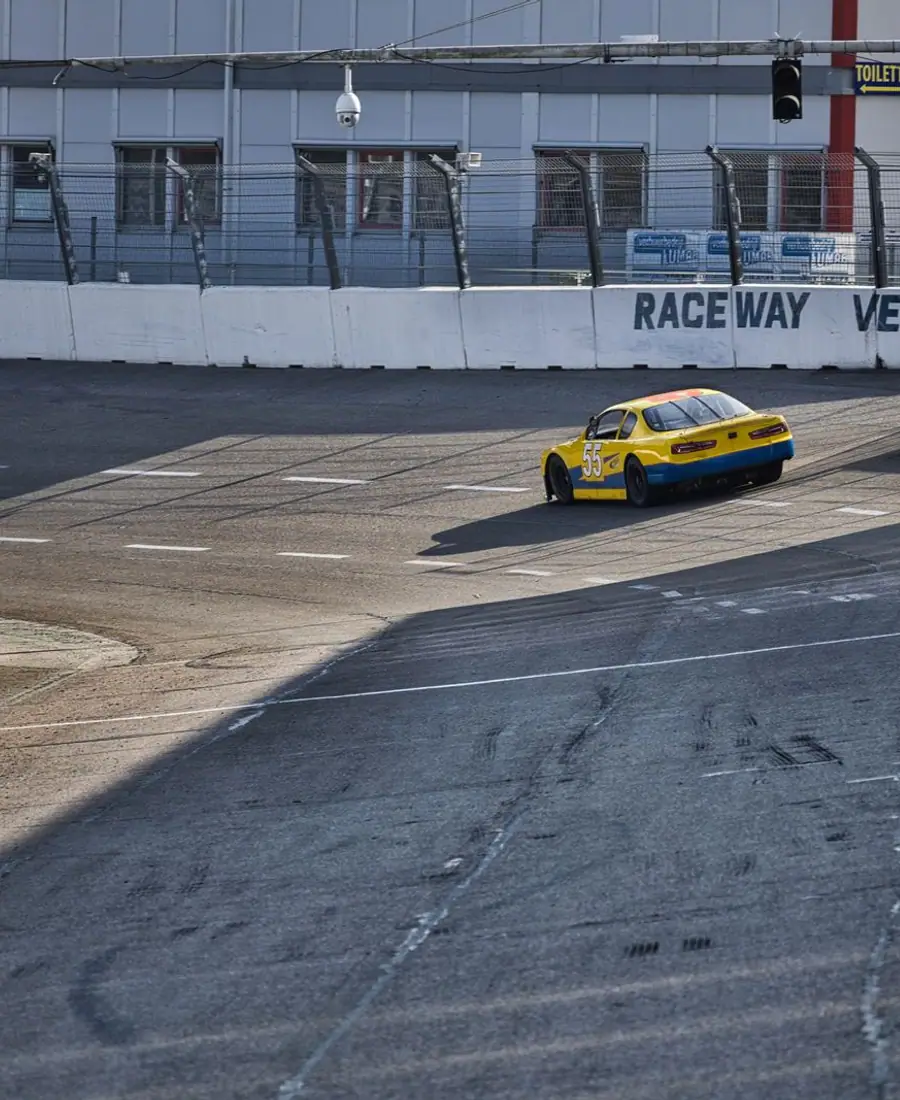
A last-lap pass is racing with the safety net removed. There is no next lap to make it up, no strategy left to play, just a driver, a rival, and one shot. These are the moments that outlive the seasons that produced them, and the best ones share a common thread: they worked for a reason, not by luck.
The 1979 Daytona 500 finish
The most consequential last lap in the sport's history was decided not by a clean pass but by a wreck. Cale Yarborough and Donnie Allison, battling for the lead, tangled in the final corners and crashed, handing Richard Petty a win he was not close to earning moments earlier. It aired live into a snowbound national audience and helped launch NASCAR into the mainstream.
Why it mattered tactically: it is the definitive lesson that on the last lap, the block and the counter-move carry enormous risk. Two cars fighting for one line at the front is a coin flip, and both drivers can lose.
The 1979 finish taught a generation that the last lap does not reward the fastest car. It rewards the one still pointed forward at the line.
The 2007 Daytona 500 photo finish
Kevin Harvick edged Mark Martin at the line in a green-flag drag race to the flag while cars wrecked behind them. This is the superspeedway last lap in miniature: Harvick had the run, the momentum from the draft, and used the closing cars behind to slingshot past just in time.
Why it worked: he timed the run. On a plate track, the pass is not about horsepower, it is about arriving at the leader's bumper with momentum at the exact right moment, and Harvick's timing was flawless.
The 2016 Daytona 500 finish
Denny Hamlin beat Martin Truex Jr. by inches in the closest finish in Daytona 500 history. Side by side to the stripe, it was decided by which car had the last flicker of momentum and the better run off the final corner.
Why it worked: it is the purest illustration that a superspeedway is won in the final hundred feet, and that the trailing car with a run has the advantage over the leader who has to guess which lane to defend.
Ross Chastain's Martinsville wall-ride
Not a pass in the traditional sense, but one of the most audacious last-lap moves ever: Chastain rode the wall wide open through the final corners of Martinsville, gaining several spots on raw speed to advance into the Championship 4. It was borrowed from a video game and executed at full commitment.
Why it worked: pinning the car against the wall removed the need to slow for the corner, trading a scraped right side for corner speed no conventional line could match. It was so effective it was later restricted, which is the surest sign a move genuinely worked.
What the greats have in common
Strip away the eras and the tracks, and the best last-lap moves rhyme:
- Momentum beats position. The car with a run, not the car in front, usually holds the advantage.
- The defender is guessing. Leading on the last lap means choosing a lane to protect and hoping it is the right one.
- Total commitment. These passes work because the driver decided before the corner that there was no lifting.
The last lap is the sport distilled. No stage points, no fuel windows, no tire strategy, just the oldest question in racing: who wants it, and who timed it right.