
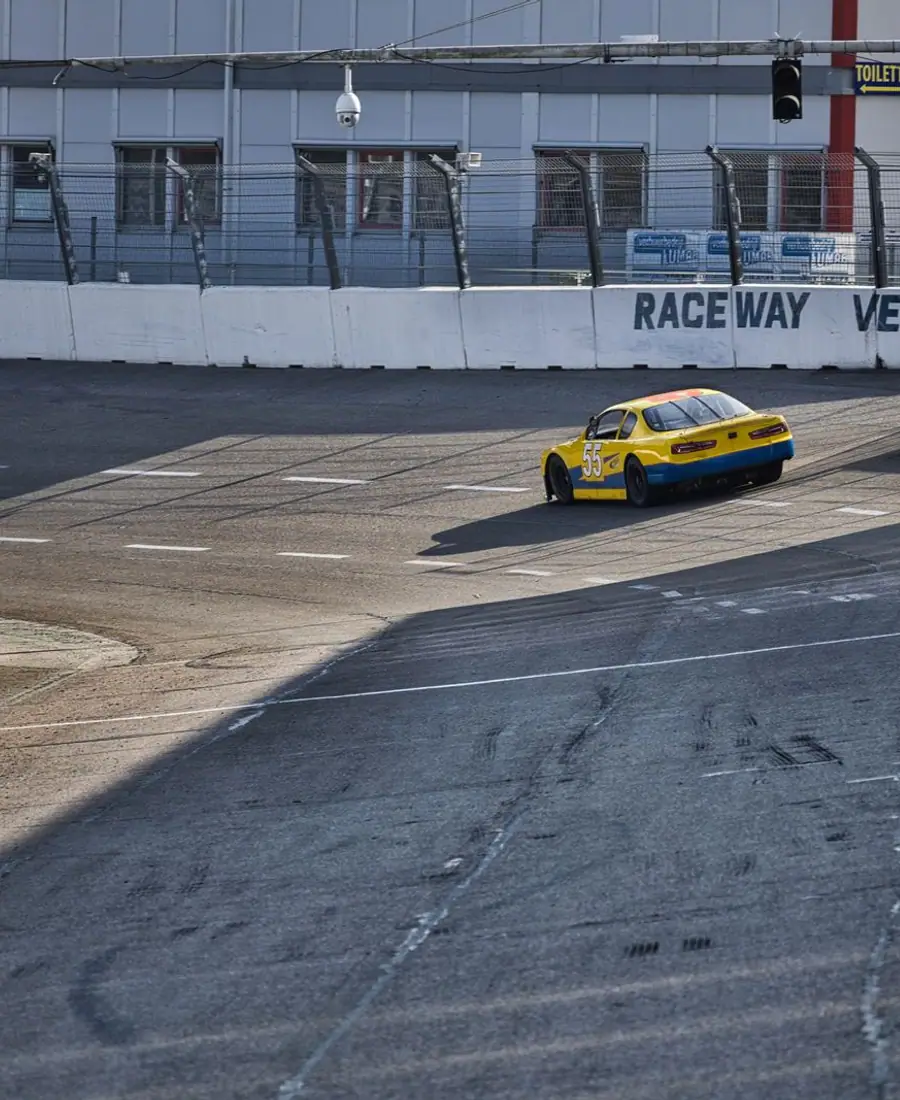
Green-flag racing is a marathon. A restart is a knife fight. In the handful of seconds after the field goes back to green, more positions change hands than in dozens of green-flag laps, and the drivers who master restarts win races they had no business winning on pure speed. It is one of the most learnable, and most decisive, crafts in the sport.
The restart zone: timing is everything
On a restart, the leader controls the pace and gets to choose when to go, but only within a marked restart zone. He must accelerate to full speed somewhere inside that box, and picking the right moment is a genuine skill.
Go too early and you launch the whole field before you have a gap, letting the second-place car get a run and drag-race you into turn one. Go too late and you risk a penalty for firing outside the zone. The best leaders spring it at the last useful instant, catching the row behind flat-footed and building a cushion before anyone can react.
The leader's advantage is that he decides when the race restarts. The trap is that everyone behind is watching his tires for the twitch, waiting to time their own launch off his.
Choosing a lane
On a double-file restart, the front-row drivers choose their lane, and every track has a preferred one. The bottom is usually the shorter path and lets a driver protect the corner, but it can get stacked up and lose momentum. The top can carry more speed but risks getting hung out with nowhere to go.
Getting the lane choice right is half the battle. A driver who picks the wrong lane can lose three or four spots before the first corner through no fault of his driving. Reading which lane is working that day, and how it is changing as the race goes on, is a real tactical skill that separates the veterans from the hopefuls.
The launch and the first corner
The launch itself is a clutch-and-throttle problem. Too much wheelspin and you bog down; too gentle and the car alongside beats you off the line. Then comes the first corner, the most dangerous point of any restart, where a whole field arrives at a braking zone side by side, often three wide, with cold tires that have lost grip during the caution laps.
This is where the craft compounds:
- Cold tires mean less grip exactly when the cars are most bunched, so overdriving the first corner ends races.
- Track position gained in the first corner is disproportionately valuable because the field is still packed.
- Patience in that first corner, resisting the dive that ends in a wreck, is what lets a smart driver still be racing on lap two while the aggressive one is in the wall.
The two-lap window
Most of the damage is done in the first two laps after green. That is the window where cold tires, bunched cars, and adrenaline collide, and it is why you see the running order scramble so violently right after a restart before settling down.
Drivers who understand this treat every restart as a mini-race with its own strategy: nail the launch, pick the right lane, survive the first corner, and make the aggression pay in the two laps before the field spreads back out. Get those seconds right and you can gain a fistful of positions. Get them wrong and a great car finishes a lap in the fence. Few things in the sport reward preparation and punish carelessness as sharply as the restart.