
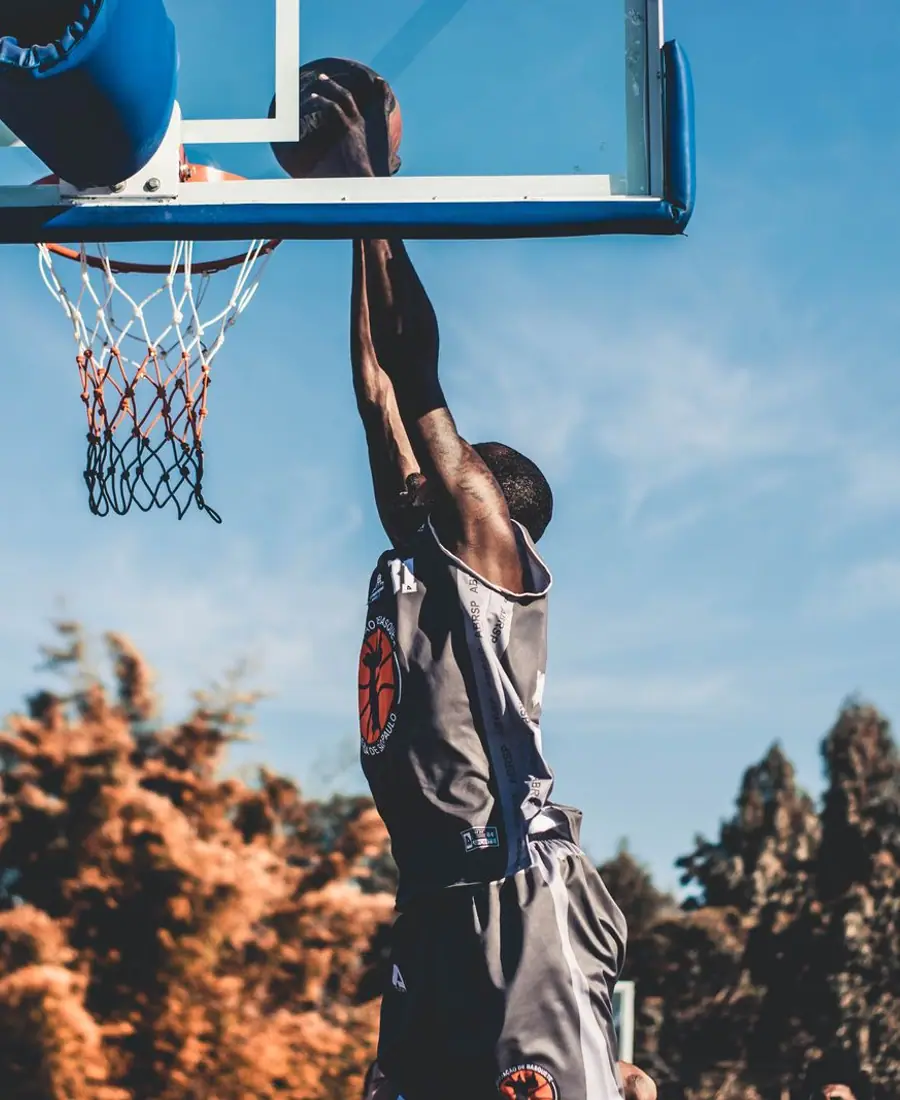
The floater doesn't make highlight reels. There's no rim-rattling finish, no poster. But in a game where seven-footers protect the rim and defenses are engineered to wall off the paint, the floater is how smaller players survive in the lane. It's the most underrated skill in basketball, and one of the hardest to master. Here's the craft.
The problem the floater solves
A guard driving into the paint faces a brutal choice. Go all the way to the rim and a rim protector — a much taller, longer defender waiting at the basket — swats or alters the shot. Pull up for a jumper and the drive was wasted. The floater lives in the gap between: a high, soft shot released before reaching the rim protector and arcing over his reach.
The floater is a geometry solution. It trades the higher percentage of a layup for a shot the big man physically cannot reach — points from a zone the defense thought it owned.
That's why it's a survival skill for the modern guard. It lets a small player score in the one area the defense is built to deny.
The mechanics nobody talks about
The floater looks effortless, which is exactly why it's so hard. Several elements have to click at once:
- The gather and footwork. The best floaters can be launched off either foot, from a one-two step or a running one-foot push, so the defender can't time the release. Being tied to a single takeoff foot makes you predictable and blockable.
- The high, soft arc. The whole point is height. A flat floater gets blocked; a high one drops over the outstretched arm and settles softly through the net. Touch, not power.
- The release point. Too early and it's a low-percentage prayer; too late and you're back in the shot-blocker's kitchen. Elite floater-shooters have an internal sense of the exact distance where they're out of reach but still in range.
- Off-hand and angles. Great floater artists can finish with either hand and off odd angles, because the defense will steer them to their weak side on purpose.
Why it can't really be rushed
The floater resists drilling in a way most shots don't. Touch is built through thousands of live reps at game speed, against real length, from constantly varying distances. You can groove a set jump shot in an empty gym; you can't groove a floater the same way, because its entire value is situational — different distance, different defender, different angle every time. That's why it tends to arrive later in a player's development, and why a rookie guard with a reliable floater is such a promising sign.
How to appreciate it
Next time a guard scores over a big man in the lane, rewind it. Watch the takeoff foot — was he balanced, or improvising? Watch the arc — did the ball climb over the reach or barely clear it? Watch the timing — did he release a half-step early to stay out of the block?
The floater will never get the roar a dunk gets. But it's the shot that keeps small players relevant in a giant's paint, and mastering it is one of the quiet dividing lines between a scorer and someone who just jumps high. Beauty, in basketball, is often the shot nobody notices.