
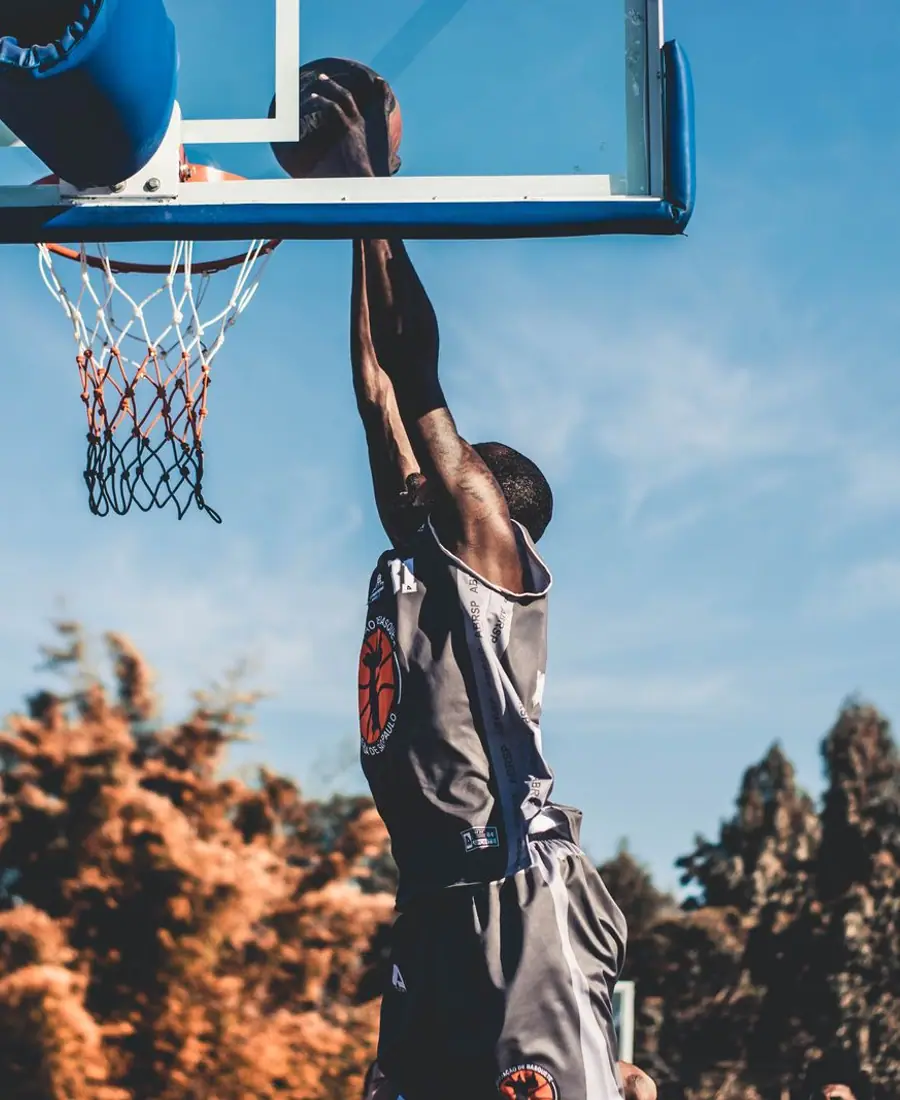
Offense is easy to watch. The ball tells you where to look, and the scoreboard tells you it worked. Defense is nearly invisible to a new fan, because the best defensive plays often involve a shot that never happens — a pass not thrown, a drive not attempted. Learning to see defense is the single biggest upgrade to your basketball literacy. Here's where to point your eyes.
Stop watching the ball
The first and hardest habit: look away from the ball. On any possession, one defender is guarding the ball and four are guarding space, threats, and passing lanes. That off-ball work is where games are actually won and lost, and it's completely invisible if you only track the action.
The best defensive possession often ends with a bad pass or a reset — nothing happens, because the defense made sure nothing could. In defense, an empty box score can mean a perfect possession.
Pick one off-ball defender and watch only him for a full possession. You'll see a constant stream of small decisions — pointing, sliding, hedging, recovering — that never touch the ball and never show up in a stat.
What great defenders actually do
Once you're watching away from the ball, look for these:
- Being in two places at once. Great help defenders position themselves to guard their own man and threaten the ball — one foot in the passing lane, eyes splitting two responsibilities. It's called being "in the gap," and it's the essence of team defense.
- Talking. Watch mouths and hands. Elite defenses are loud — calling out screens, pointing to cutters, signaling switches. A quiet defense is usually a broken one.
- Beating the offense to the spot. The best defenders don't react; they anticipate. They're already where the offense wants to go, forcing a change of plan before the play develops.
- Contesting without fouling. A high, straight-up hand that alters a shot without contact is a small masterpiece. Blocks are loud; good contests are quiet and far more frequent.
The plays that never reach the box score
The deepest lesson for a new fan is that defense's best work is often the absence of an event. A defender who navigates a screen so well the ball-handler never gets a shot off. A help defender whose mere positioning convinces a driver to pull the ball back out. A team whose rotations are so crisp the offense passes itself into a shot-clock violation.
None of that shows up as a block or a steal. In fact, gambling for steals and blocks often produces bad defense — a player who leaves his man to chase a highlight can surrender an easy basket. The steadiest defenders rack up fewer flashy stats and more stops.
A simple exercise
Next game, spend one quarter ignoring the ball entirely. Track a single defender. Notice how often he's helping, recovering, communicating, and positioning — and how rarely any of it registers on the broadcast. By the end of the quarter, you'll see a whole second game running underneath the one everyone else is watching.
That's the game the best players and coaches obsess over. Once you can see it, you'll never watch a possession the same way again.