
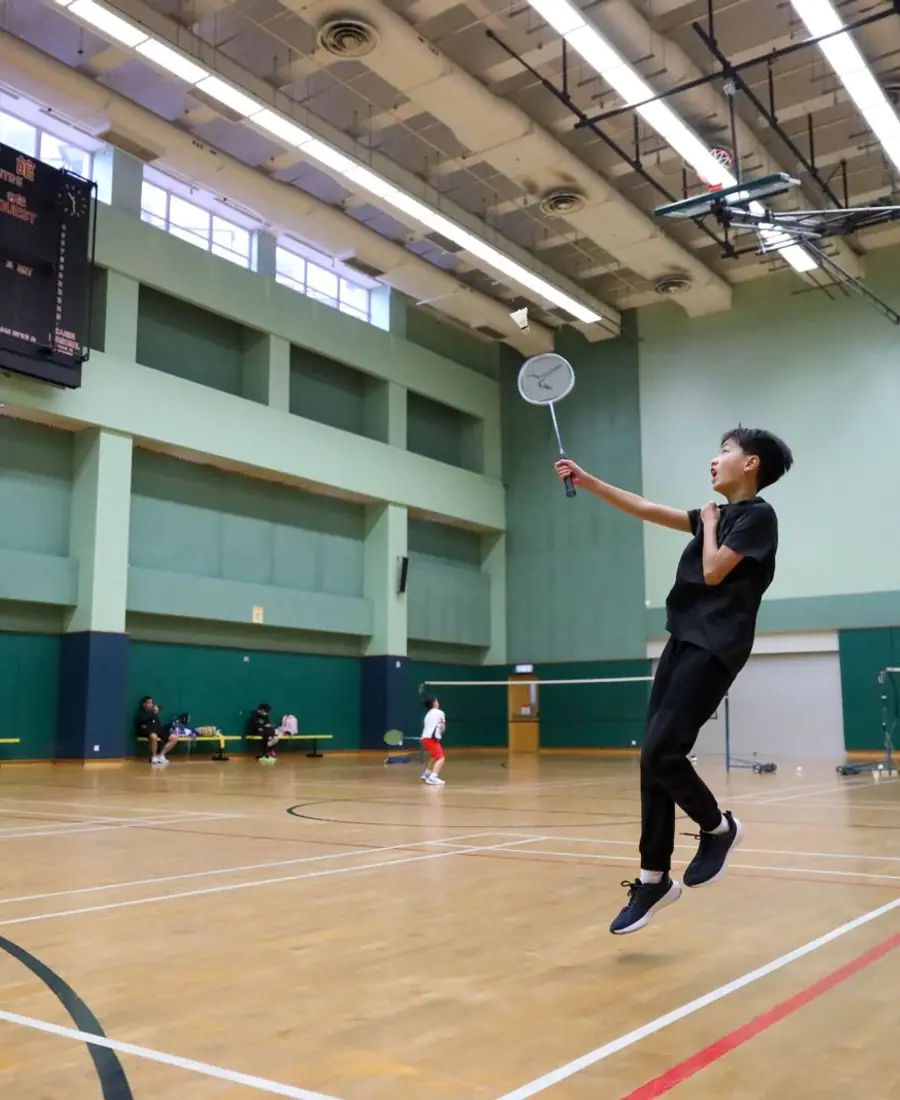
Ask a club player what makes a great smash and they'll talk about power. Ask a coach and they'll talk about time. Specifically, they'll talk about the fraction of a second in which your opponent has to decide whether to defend a smash, cover a drop, or step in for a clear. Deception is the craft of stealing that fraction.
Everything Should Look the Same Until It Can't
The foundation of hiding a smash is a consistent preparation. From the moment you turn side-on and load, the clear, the drop, and the smash should be indistinguishable. Same shoulder rotation, same racquet-up position, same non-racquet arm pointing to track the shuttle. If your smash requires a bigger wind-up than your drop, a good opponent reads your intention before you've swung.
Watch a top singles player prepare under a high lift. The elbow is up, the racquet head cocked behind the shoulder, and crucially the forearm hasn't committed. The shot lives in the last 10 to 15 degrees of pronation. Everything before that is a poker face.
The smash isn't hidden by the arm. It's hidden by the arm doing exactly what it did on the last twenty shots that weren't smashes.
The Cues Opponents Actually Read
Defenders don't watch the shuttle to anticipate a smash. They watch you. The tells they hunt for are:
- A dropped racquet head that has to be re-cocked (telegraphs a delay, often a drop or clear)
- Hips that rotate early and violently (screams full-power smash)
- A change in the non-racquet arm — pulling it down too soon collapses the shoulder
- Feet that plant flat rather than staying loaded for a jump
Great deceivers neutralise these one by one. They keep the racquet head high, delay the hip drive so it fires late, and hold the shape a beat longer than feels comfortable.
Slice, Hold, and the Late Wrist
Once your preparation is honest, the deception comes from what you do at contact. Three tools matter most.
The hold is a micro-pause at the top of the swing. You arrive early, wait for the defender to commit, then release. Even a tenth of a second is enough to freeze someone who has already guessed.
The slice lets you take a full-looking swing and produce a soft, dying shot. Because the arm speed says smash, the defender loads to absorb pace that never comes, and the shuttle floats into the forecourt.
The late wrist — really a late forearm pronation — is what lets one preparation produce a cross-court slice, a straight full smash, or a stick smash into the body. The direction is decided last, after the opponent's weight is already moving.
Training It Without a Coach
You can build this alone against a wall or with a feeder. Start by shadowing all three shots from an identical base position until a filming buddy can't tell them apart at half speed. Then add a hitting partner whose only job is to call "drop" or "smash" as early as they can. Your success metric isn't power. It's how late they're forced to call it.
The uncomfortable truth is that a disguised 250 km/h smash beats an obvious 300 km/h one almost every time. Speed you can prepare for. Time you cannot manufacture. Spend a month making all your overheads look identical, and you'll win points you used to lose — with the same arm you already have.