
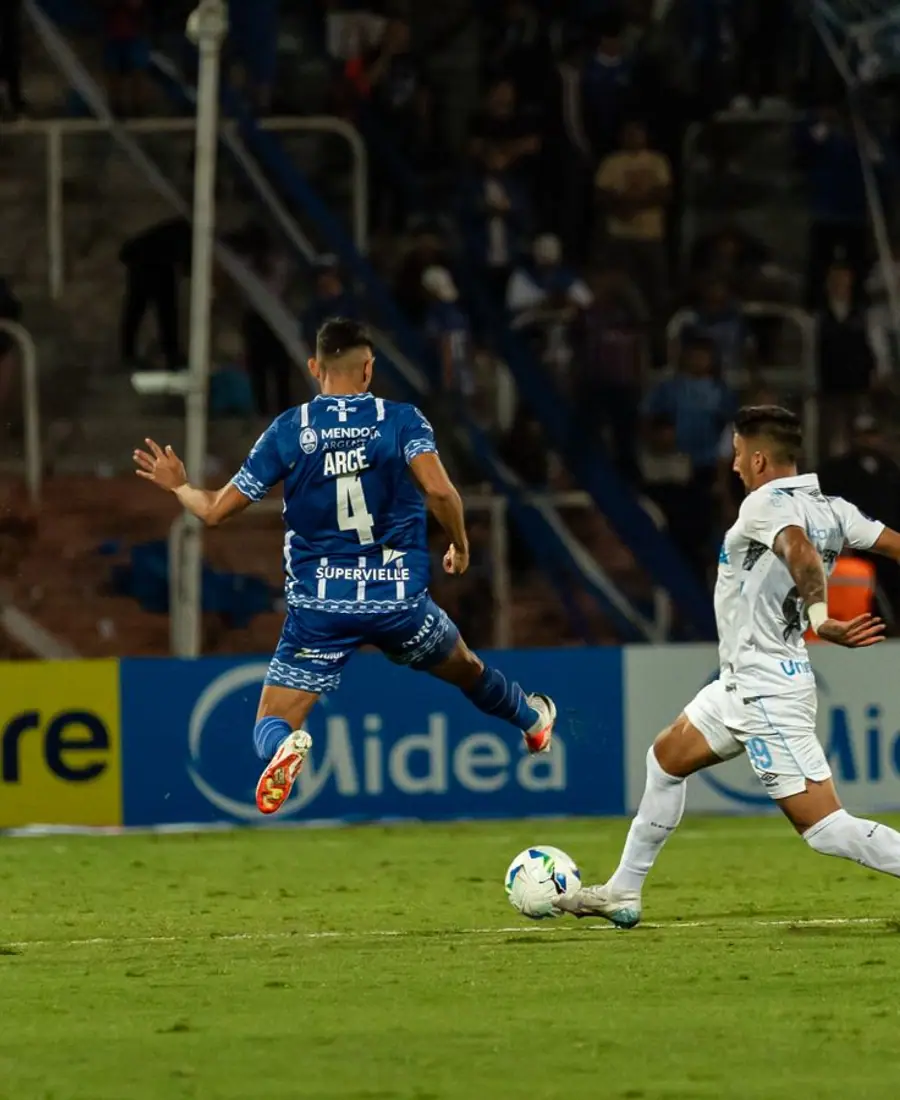
The inverted full-back is the position modern football invented without anyone drafting a job description. Ten years ago, a full-back's remit was simple: defend the flank, overlap when you can. Today, the best of them spend half the match in central midfield.
What inverting actually means
When his team has the ball, an inverted full-back steps inside from the touchline into the space next to the holding midfielder. Instead of hugging the sideline, he forms a temporary double pivot in the centre. The back four becomes a back two-plus, and the midfield suddenly has an extra body exactly where games are won.
The logic is spatial. Most pressing schemes are built to trap the ball wide and outnumber you near the touchline. Move your full-back inside and you sidestep the trap before it closes; the pass into midfield is now central, with more angles fanning out around it.
Why coaches keep reaching for it
- Control of the middle. Three central midfielders beat two. An inverted full-back manufactures that overload without buying another midfielder.
- Rest defence. With one full-back tucked in, the team is already half-organised for the counter the moment possession is lost. Fewer sprints back, fewer gaps.
- Freed wingers. The winger no longer shares the flank, so he can stay high and wide, stretching the pitch and pinning the opposition full-back.
The point isn't to have your full-back in midfield. The point is to have more players than the opponent in the zone where the ball needs to travel next.
The player it demands
This is not a job for every good defender. The inverted full-back has to be press-resistant in tight central areas, comfortable receiving on the half-turn, and quick enough in the head to read when a move has broken down. A misplaced pass here isn't a throw-in conceded on the wing; it's a shot on your own goal.
The archetype comes in two flavours. One is the converted midfielder playing at full-back, all balance and short passing. The other is the athletic defender taught to think like a pivot. Both need positional discipline that borders on the obsessive, because the whole structure collapses if he inverts at the wrong moment.
The trade-offs nobody advertises
Invert your full-back and the flank behind him is empty. If the winger doesn't tuck back or the centre-back can't cover wide, a single switch of play can spring a two-on-one. That's why the tactic lives and dies on rehearsal: who covers, who drops, who steps. Teams that invert well look effortless. Teams that copy the shape without the coaching look like they've left a door open, because they have.
Done right, the inverted full-back is less a position than a solution: a way to be strong in the centre in possession and compact out of it, using the same eleven players. That flexibility is exactly why the role has gone from novelty to near-standard in barely a decade.