
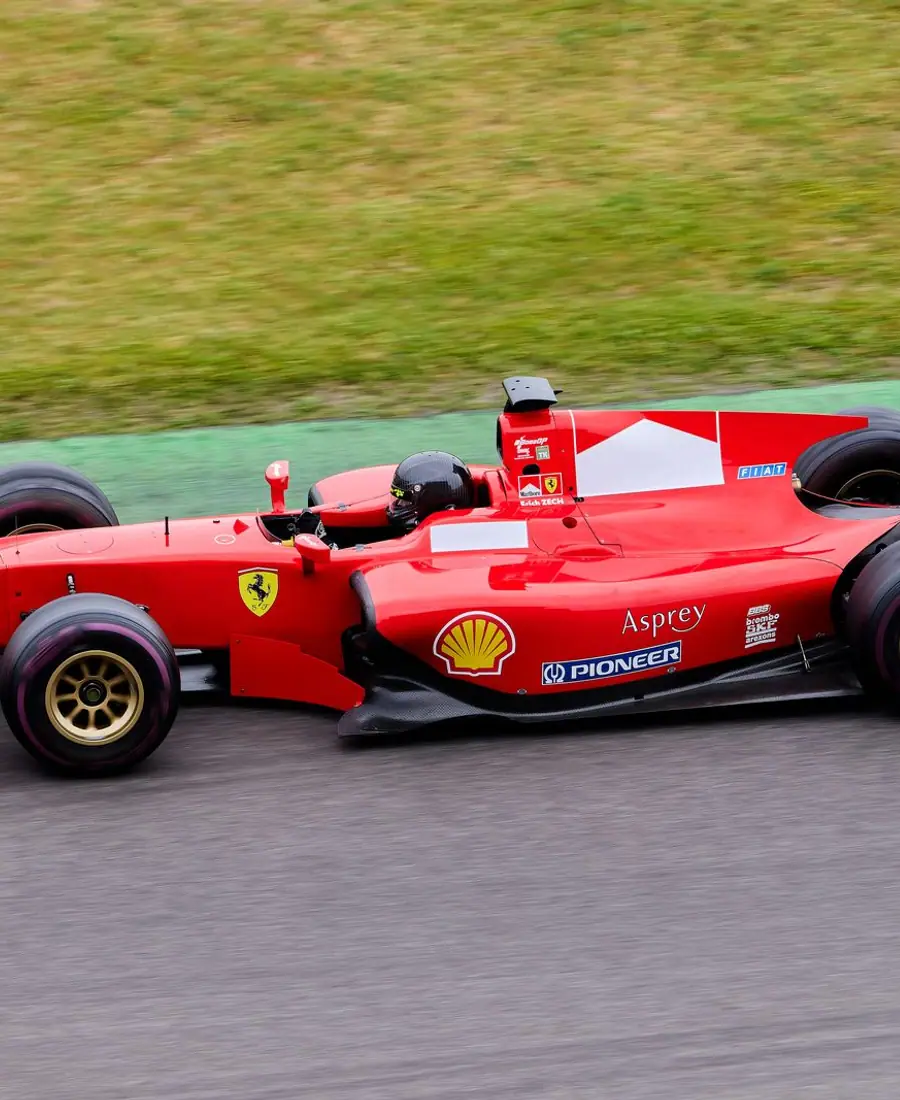
Ask a casual fan who has the fastest car and they will point at pole position. Ask an engineer and they will ask you to define fast. One-lap pace and race pace are different skills, drawn from different parts of the car, and the gap between them is one of the most revealing numbers in the sport.
Two very different tests
Qualifying is a sprint. Low fuel, fresh tyres, one clean lap, everything turned up to maximum. It rewards peak grip and a car that can be thrown at the limit for ninety seconds without consequence. Tyre life is irrelevant when the tyre only has to survive one lap.
The race is a marathon. High fuel at the start, tyres that must last a full stint, and a premium on consistency rather than a single heroic lap. A car that punishes its tyres to find that last tenth on Saturday can quietly bleed seconds on Sunday as the rubber gives up.
Reading the gap
The useful analysis is not either number alone; it is the relationship between them.
- A car that qualifies well but fades in the race usually has a peaky setup or an aggressive relationship with its tyres — brilliant for one lap, cruel over twenty.
- A car that qualifies poorly but races strongly is often kind to its tyres and comes alive as others degrade around it, hunting them down in the final stint.
Saturday tells you how high a car can reach. Sunday tells you how long it can hold on. Championships are won by cars that do both.
The trap of the headline time
This is why practice long-run data matters more than the timing screen suggests. During Friday running, teams pore over stint pace — the average lap time across a long run, and crucially the rate at which those laps slow down as the tyre degrades.
A driver might be a few tenths off the quickest single lap yet have the flattest degradation curve in the field. On a circuit where the race comes down to tyre life, that flat curve is worth more than a front-row start. The eye-catching qualifying time can be a mirage built on a setup the car cannot sustain for a full race.
What the gap tells you about a team
Over a season, a persistent pattern is a fingerprint. Teams that consistently over-perform in the race relative to qualifying tend to have deep tyre understanding and mature setups. Teams that flatter to deceive on Saturday often have raw aerodynamic grip but have not solved how to deliver it gently over race distance.
So the next time a car snatches a surprise pole, hold your judgement until the long runs come in. The pole lap is a photograph. The race is the whole film, and the two do not always tell the same story.