
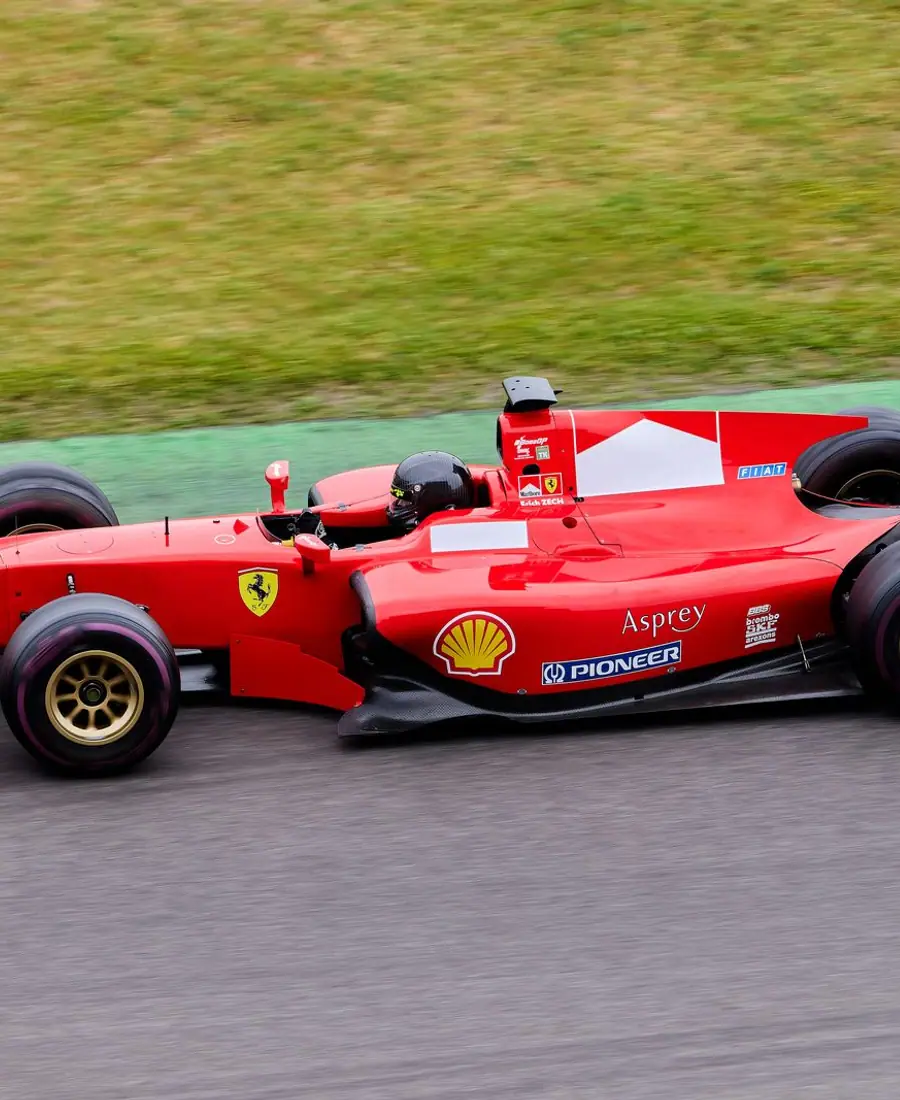
Point a camera at a Formula 1 car and your eye goes to the wings — the big, obvious aerodynamic structures front and rear. But the surface that does the most to win races is the one hidden underneath: the floor. Understanding ground effect is understanding where the modern sport's real engineering war is fought.
What ground effect actually is
Downforce is the aerodynamic grip that presses the car into the track, letting it corner faster. Wings generate it, but they pay a heavy price in drag, and they suffer badly in the dirty air behind another car.
Ground effect is a cleverer route to the same goal. Shape the underside of the car and the tunnels within the floor correctly, and the air flowing beneath is accelerated and its pressure drops. Low pressure under the car and normal pressure above it effectively sucks the car onto the road. Crucially, this produces enormous downforce with far less drag than wings, and it is less disrupted when following another car — which is precisely why the sport reached for it to improve racing.
Why the floor is so hard to master
Ground effect is powerful but temperamental. Its performance depends on how the floor sits relative to the track — its ride height and rake. Get the car to run low and stable and the downforce is immense. But run it too low and the airflow under the floor can stall abruptly, causing the downforce to vanish and return in a violent cycle.
That instability is the engineering knife-edge. Teams chase the maximum downforce that a stable platform allows, and the ones that solve how to run the car low without triggering that instability find lap time nobody else can access.
The floor rewards teams that can run their car closest to the ground without losing control of the airflow. That margin is measured in millimetres and worth tenths a lap.
Why the rules keep circling it
Because the floor is so performance-critical, it is also where the regulator applies pressure. Rule-makers adjust floor dimensions, edge details and height limits to control downforce levels, to rein in cornering speeds for safety, and to manage the instability that can make cars bounce down the straights.
Each tweak sends teams scrambling to recover lost performance within the new constraints, which is why the floor is a permanent development battleground. A change that looks minor on paper — a raised edge here, a restricted tunnel there — can reshuffle the competitive order because it touches the single most sensitive area of the car.
What to watch for
You cannot see the floor working, but you can see its symptoms. A car that looks planted and stable through high-speed corners is getting its underfloor right. A car that bounces or skips on the straights, or that suddenly loses grip mid-corner, is wrestling with the dark side of ground effect.
The wings will always grab the eye. But if you want to know why one team has found half a second and another has lost it, look down. The real story of modern F1 aerodynamics is written on a surface almost nobody in the grandstand ever sees.